شاحنات التحميل الخلفي مقابل شاحنات التحميل الجانبي لشاحنات القمامة | المركبات العلوية
Introduction
Choosing between a rear loader and a side loader garbage truck compactor is not just a matter of preference. It directly affects collection efficiency, labor cost, safety, and long-term operating expenses.
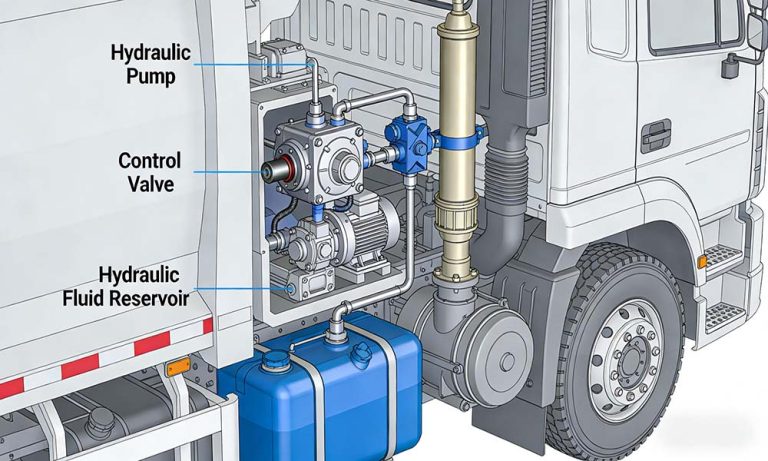
To make the right choice, it is essential to first understand كيفية عمل ضاغطة شاحنة القمامة and how loading direction influences compaction cycles and hydraulic stress.
Municipal fleets, private contractors, and export buyers often struggle with this decision, especially when routes vary between residential streets, commercial districts, and mixed waste environments. Understanding how each compactor type performs in real-world conditions helps avoid costly mismatches.
This guide provides a practical, experience-based comparison of rear loader vs side loader garbage truck compactors, focusing on performance, operating scenarios, and long-term value.
What Is a Rear Loader Garbage Truck Compactor?
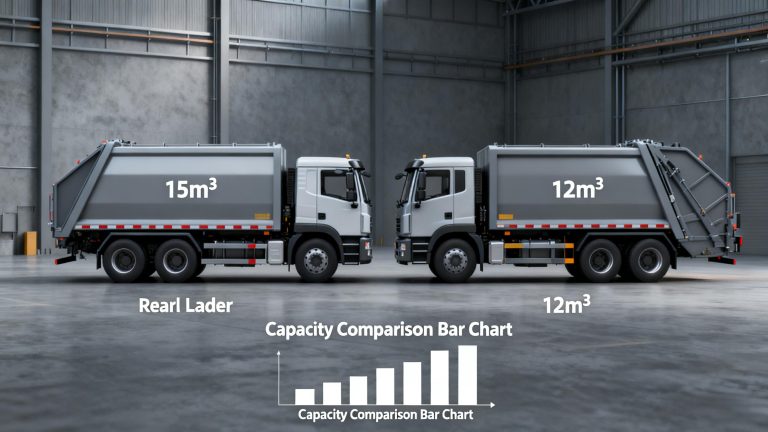
A rear loader compactor loads waste from the back of the vehicle into a hopper, where a hydraulic packer compresses material into the body chamber.
Key Characteristics
- Manual or semi-automatic loading
- High compaction force
- Excellent tolerance for mixed and bulky waste
- Flexible operation in narrow or irregular routes
Typical Applications
- Residential neighborhoods
- Mixed municipal waste
- Developing markets with manual labor availability
For municipalities handling diverse waste streams, a شاحنة قمامة تحميل خلفي remains one of the most adaptable and widely used solutions.

What Is a Side Loader Garbage Truck Compactor?
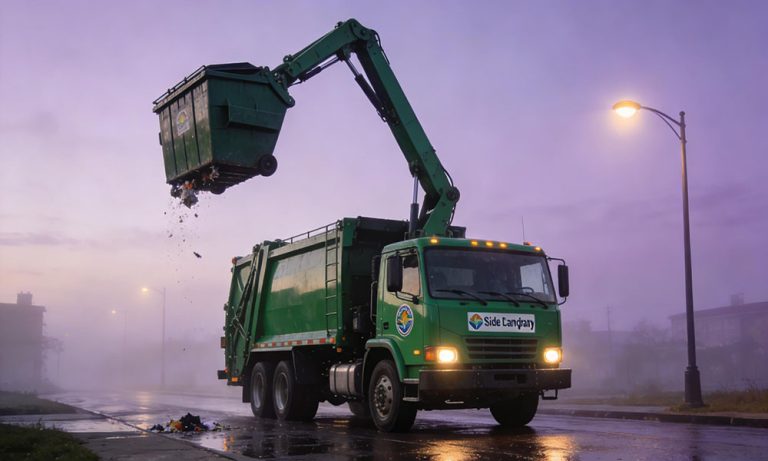
A side loader compactor uses hydraulic arms mounted on one side of the truck to lift and empty standardized bins into the hopper, often operated by a single driver.
Key Characteristics
- Fully automated or semi-automated loading
- Reduced labor dependency
- Faster cycle times on uniform routes
- Requires compatible bin systems
Typical Applications
- Residential areas with standardized containers
- High-labor-cost regions
- Urban routes prioritizing speed and safety
In regions with consistent bin standards, a شاحنة قمامة ذات لودر جانبي offers clear advantages in automation and manpower efficiency.

Rear Loader vs Side Loader: Key Differences
1. Loading Method & Flexibility
Rear loaders allow manual loading of loose waste, bags, and oversized items. Side loaders depend heavily on standardized bins and clear access space.
Winner: Rear loader (flexibility)
2. Labor Requirements
Side loaders often operate with a single driver, while rear loaders usually require 2–3 crew members.
Winner: Side loader (labor efficiency)
3. Compaction Performance
Rear loaders typically achieve higher compaction ratios due to stronger packer plates and larger hopper capacity, especially for mixed waste.
Winner: Rear loader (compaction force)
4. Route Efficiency
Side loaders excel on long, repetitive residential routes with uniform bin placement. Rear loaders handle irregular routes better.
Winner: Route-dependent
5. Safety Considerations
Automated side loaders reduce crew exposure to traffic and moving components. Rear loaders rely more on operator awareness and safety procedures.
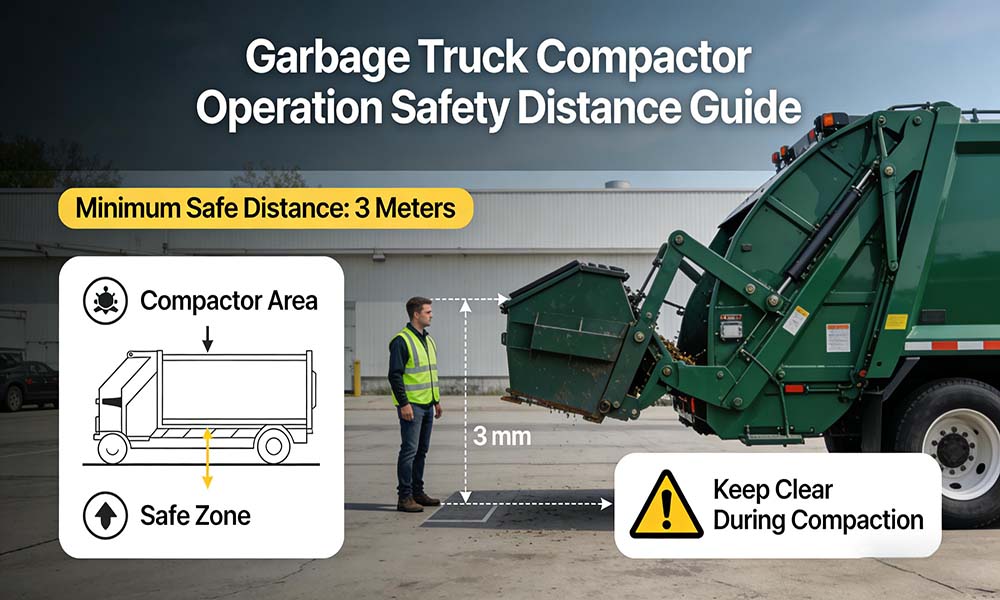
Regardless of compactor type, following proper procedures outlined in our دليل السلامة والتشغيل لشاحنة ضاغطة القمامة significantly reduces accident risks.
Cost Comparison: Purchase vs Operating Costs
| Factor | Rear Loader | Side Loader |
|---|---|---|
| Initial Cost | Lower | Higher |
| Labor Cost | Higher | Lower |
| Maintenance | Moderate | Higher (hydraulics & sensors) |
| Adaptability | High | Medium |
For export markets and developing regions, rear loaders often provide better long-term ROI due to simpler maintenance and lower upfront costs.
Which Compactor Is Better for Export Markets?
Export buyers often prioritize:
- Mechanical simplicity
- سهولة الصيانة
- Compatibility with mixed waste
- Availability of spare parts
For a complete technical overview covering structure, power systems, and maintenance, visit our دليل ضاغطة شاحنة القمامة.
This is why many international fleets choose rear loader compactors supplied by experienced manufacturers such as أعلى المركبات, which designs export-oriented models with reinforced structures and service-friendly layouts.
Choosing the Right Compactor for Your Route
There is no universal winner between rear loader and side loader garbage truck compactors. The right choice depends on route conditions, labor availability, waste type, and long-term operating strategy.
Rear loaders dominate in flexibility and durability, while side loaders lead in automation and labor savings. Evaluating real operating environments—not just specifications—ensures sustainable fleet performance.