Cómo funciona un camión de basura: guía completa sobre la recolección de residuos
Garbage trucks play a crucial role in modern waste management systems. While most people see them daily, few understand how these vehicles actually work.
From collecting waste to compacting it efficiently, garbage trucks are designed with advanced mechanical and hydraulic systems. Understanding how they operate helps buyers, operators, and decision-makers choose the right type of truck and maintain it properly.
Basic Working Principle of a Garbage Truck
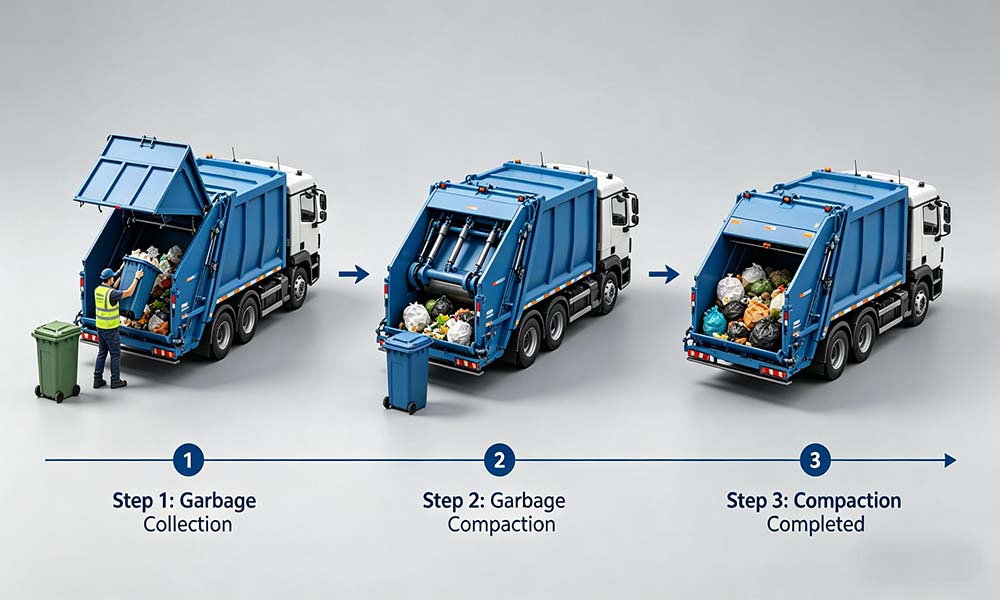
At a basic level, garbage trucks perform three main functions:
- Collect waste
- Compress waste
- Transport waste
These steps are integrated into a single system that maximizes efficiency and reduces the volume of waste during transport.
To better understand how these systems function together, many buyers review garbage truck working principle overview before selecting equipment.
Componentes principales de un camión de basura
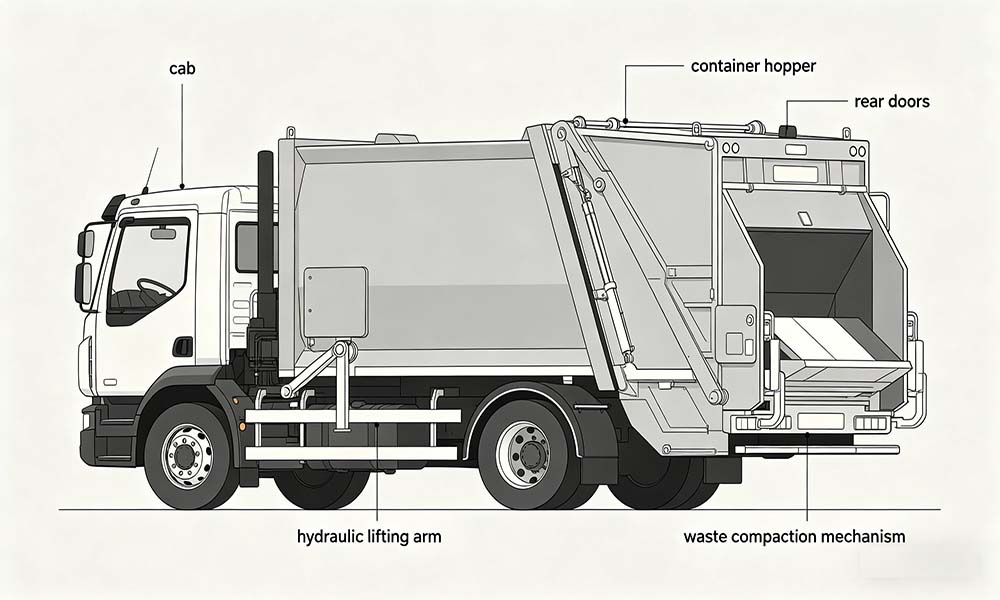
Garbage trucks consist of several key components that work together.
Hopper
The hopper is where waste is initially loaded into the truck.
Sistema compactador
The compactor compresses waste to increase capacity.
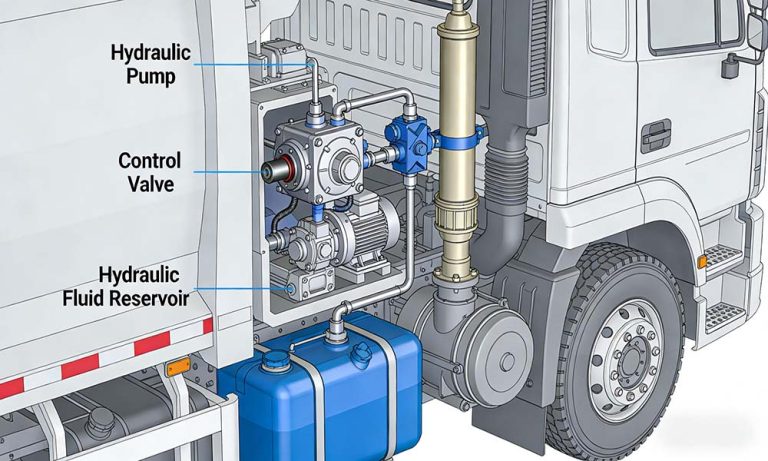
Sistema hidráulico
Hydraulics power the lifting and compaction mechanisms.
Storage Body
The truck body stores compressed waste until disposal.
Understanding these components is essential for evaluating performance. Buyers often explore garbage truck component structure guide to learn more about system design.
Cómo funciona el sistema de compactación
The compaction system is the most important part of a garbage truck.
Step-by-step process:
- Los residuos entran en la tolva
- A hydraulic plate pushes waste into the body
- Waste is compressed repeatedly
- Air gaps are reduced
- Storage capacity increases
Compaction allows trucks to carry significantly more waste compared to non-compacting vehicles.
To understand this system in more detail, buyers often review garbage compactor mechanism working details antes de tomar decisiones de compra.
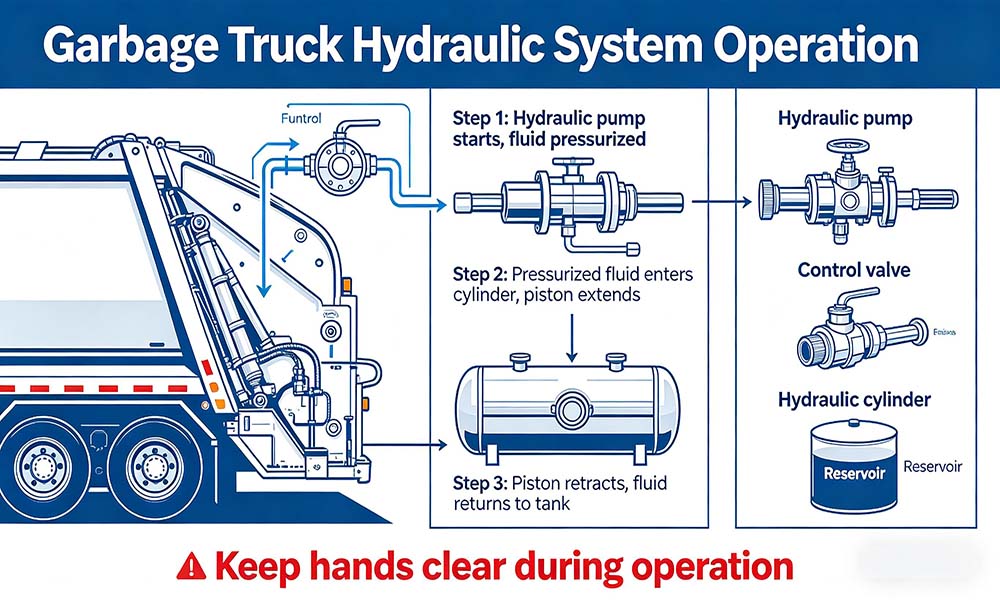
Role of the Hydraulic System
The hydraulic system powers almost every moving part of the garbage truck.
Key functions include:
- Lifting waste containers
- Operating the compactor
- Controlling moving components
A reliable hydraulic system ensures smooth operation and reduces the risk of failure.
Different Working Methods by Truck Type
Different types of garbage trucks operate in slightly different ways.
Rear Loader Trucks
Operators manually load waste into the rear hopper, where it is compacted automatically.
Front Loader Trucks
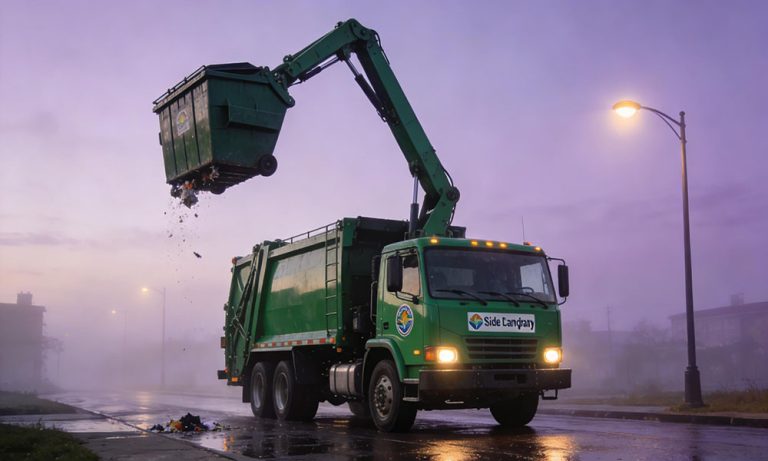
Hydraulic arms lift large containers and empty them into the truck.
Side Loader Trucks
Automated arms pick up bins from the side, allowing single-operator operation.
Each type is designed for specific use cases and environments.
Buyers often compare these working methods using garbage truck operation type comparison antes de seleccionar un modelo.
Loading and Unloading Process
Loading:
- Waste is collected and loaded into the truck
- Compaction system compresses the waste
Unloading:
- The rear door opens
- The compactor pushes waste out
- Waste is discharged at disposal sites
Efficient loading and unloading improve overall productivity.

Safety Features in Garbage Trucks
Modern garbage trucks include several safety features.
Common safety features:
- Emergency stop systems
- Sensores de seguridad
- Backup cameras
- Operator control panels
These features protect both operators and pedestrians.
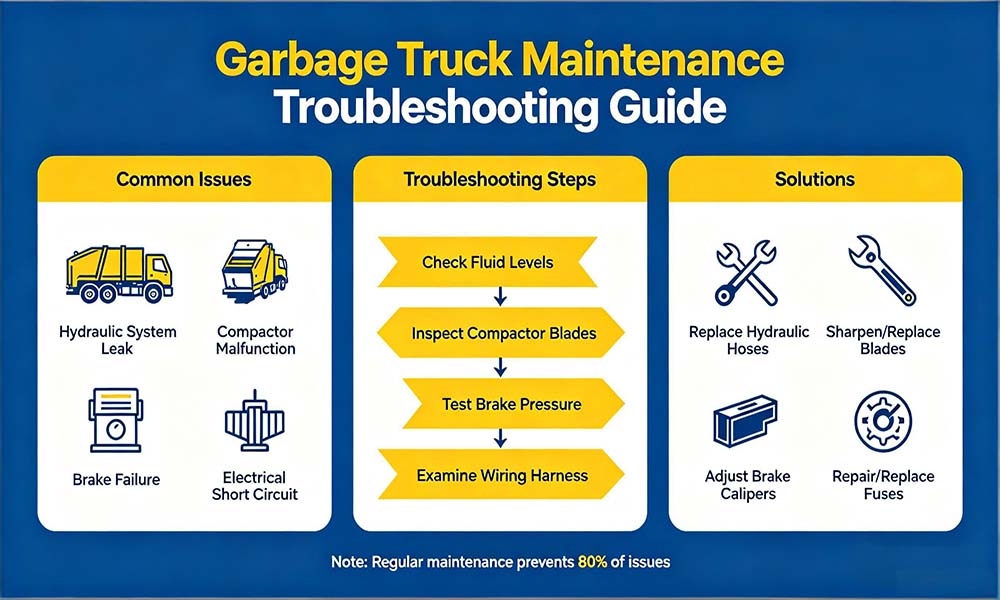
Common Operational Issues
Typical problems include:
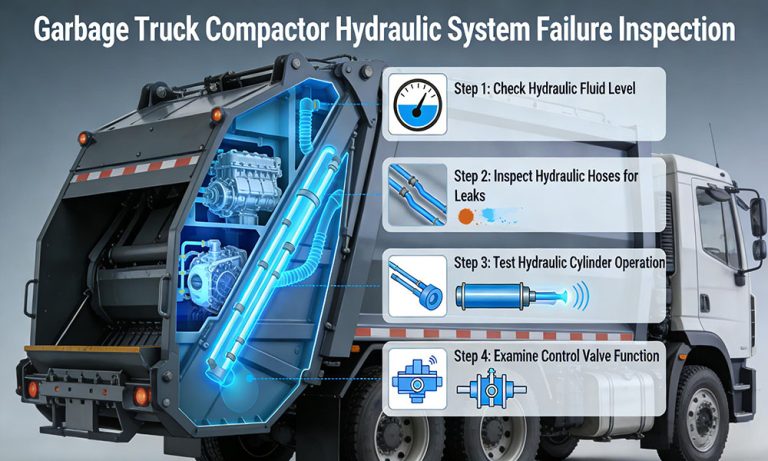
- Hydraulic system failure
- Compactor malfunction
- Electrical issues
- Sobrecarga
Regular maintenance helps prevent these issues.
Los compradores suelen referirse a garbage truck operation troubleshooting guide to identify and resolve common problems.
Why Understanding How Garbage Trucks Work Matters
For buyers and operators, understanding how garbage trucks work provides several benefits:
- Better equipment selection
- Improved maintenance planning
- Reduced operational risks
- Increased efficiency
It also helps in communicating more effectively with suppliers and service providers.
How This Knowledge Helps Buyers Make Better Decisions
Understanding the working principles allows buyers to evaluate product quality, compare different models, and choose the most suitable configuration for their needs.
For many international buyers, technical understanding is a key factor in successful procurement.