Garbage Truck Compactor Safety Guide for Daily Fleet Operations
Practical Operating Experience for Reliable Daily Use
Operating a garbage truck compactor safely is not only about following written procedures. Based on real-world feedback from municipal fleets and export customers, most safety incidents and premature failures occur during improper hopper loading, incorrect hydraulic cycle timing, or unsafe maintenance operations.
This guide summarizes practical safety and operating principles used by professional operators, focusing on rear loader and truck-mounted compactor systems commonly used in municipal and industrial waste collection.
Why Safe Operation Matters
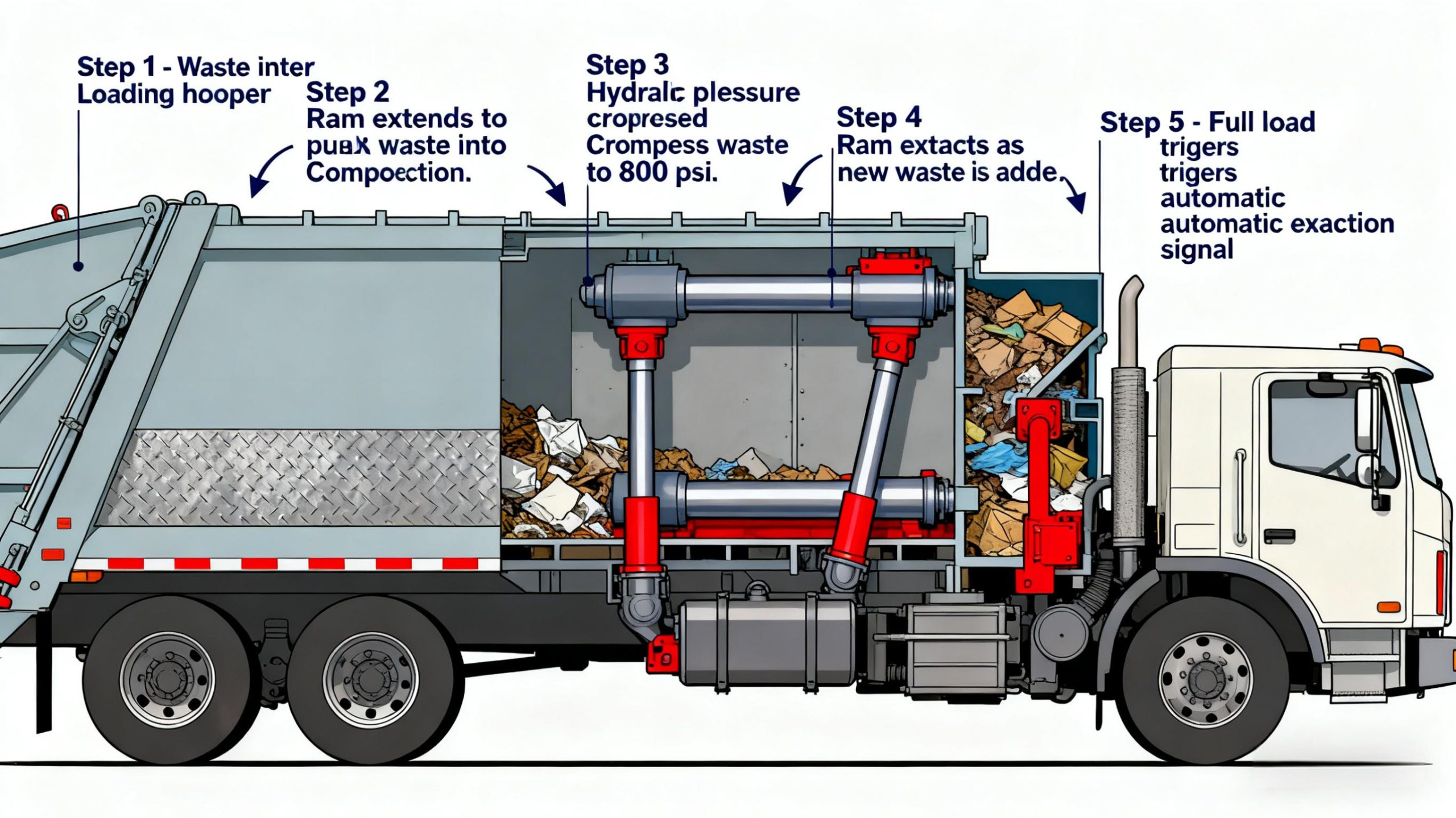
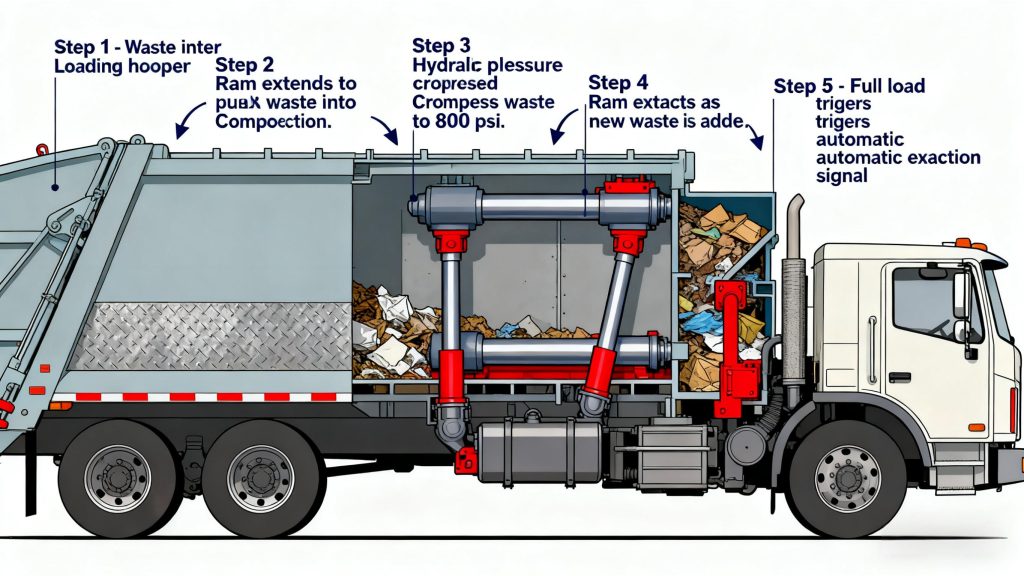
Garbage truck compaction systems operate under high hydraulic pressure, typically between 16–20 MPa, depending on design and load conditions. Incorrect operation can result in damaged cylinders, bent slide rails, or, more seriously, injuries to operators.
Safe operating procedures help to:
- Reduce unplanned downtime
- Extend compactor service life
- Maintain stable compaction performance
- Protect operators and maintenance personnel
For a better understanding of how internal components interact during compaction, refer to the
👉 garbage truck compactor structure
Key Safety Checks Before Starting the Compactor
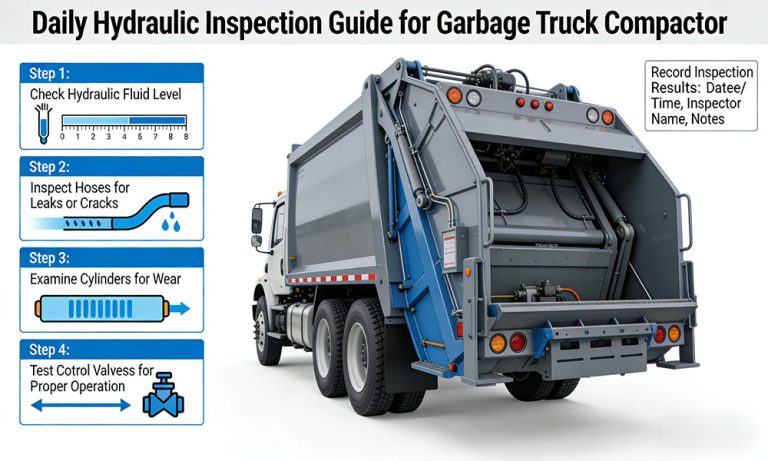
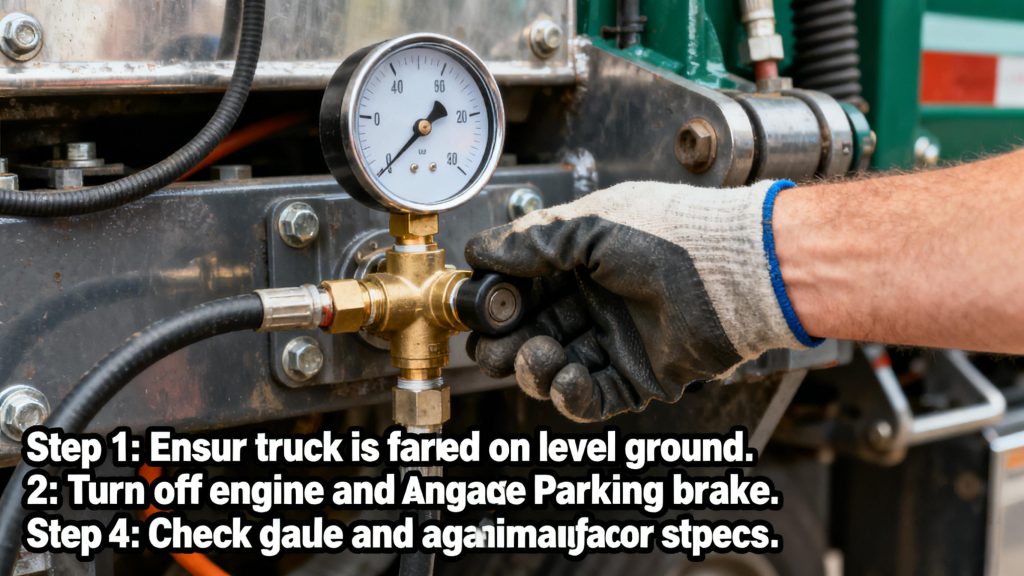
1. Inspect Hydraulic Lines and Pressure Levels
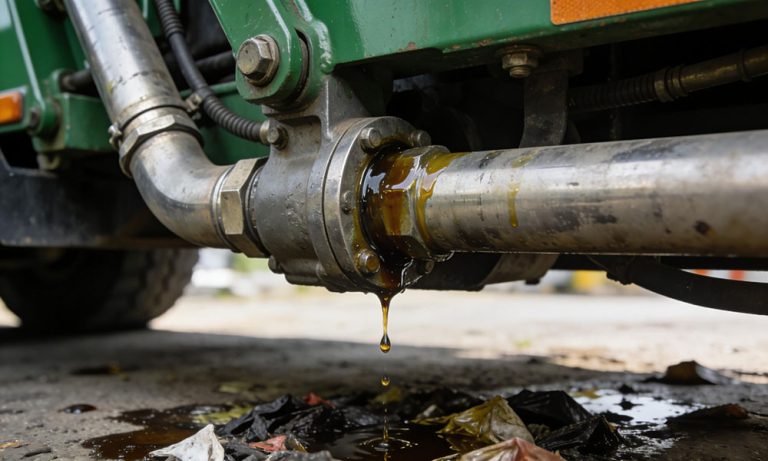
Operators should visually inspect hoses, fittings, and cylinders for leaks or deformation. Abnormal pressure readings often indicate internal leakage or valve issues. Operating a compactor outside its designed pressure range accelerates seal wear and increases failure risk.
2. Confirm Hopper and Body Clearance
Before activating any compaction cycle, ensure no tools, loose debris, or oversized waste remain inside the hopper or slide rail channel. Foreign objects are a common cause of rail deformation and panel jamming.
3. Test Electrical and Emergency Controls
All control buttons, limit switches, and emergency stop functions must respond immediately. Delayed response usually indicates wiring fatigue or moisture ingress and should be addressed before operation.
Safe Operating Procedures During Compaction
Maintain Proper Operating Distance
Operators should remain clear of moving compaction plates and hopper mechanisms. Even slow hydraulic movement generates high compressive force that can cause serious injury.
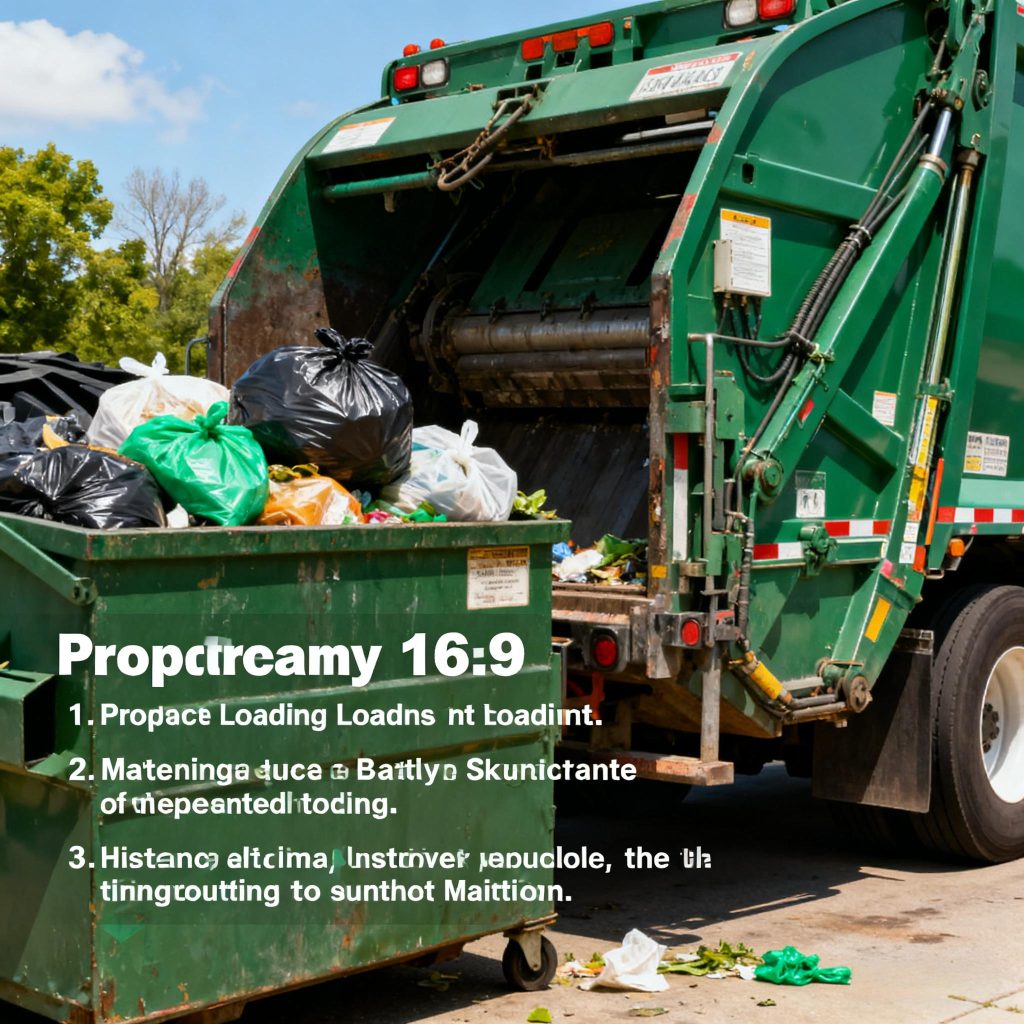
Load Waste Evenly
Uneven loading places asymmetric stress on the compaction panel and slide rails. When handling bulky or rigid waste, positioning it centrally helps reduce twisting forces and improves compaction efficiency.
Use Appropriate Cycle Lengths
For light municipal waste, shorter compaction cycles are recommended. Long cycles on low-density waste increase oil temperature without improving compaction results, leading to unnecessary wear.
Common Operating Mistakes Seen in Daily Use
In actual fleet operation, many issues arise from habits rather than mechanical defects.
For example, forcing a full compaction cycle on partially filled hoppers often increases hydraulic heat while offering minimal volume reduction. Another frequent mistake is activating compaction when oversized waste is positioned to one side, which accelerates slide rail wear and can cause cylinder misalignment over time.
Understanding these real-world patterns helps operators avoid long-term damage that is not immediately visible.
Safety Features on Modern Garbage Truck Compactors
As a manufacturer specializing in rear loader garbage truck compactor systems for export markets, Tops Vehicle integrates safety mechanisms based on long-term operational feedback rather than theoretical standards alone.
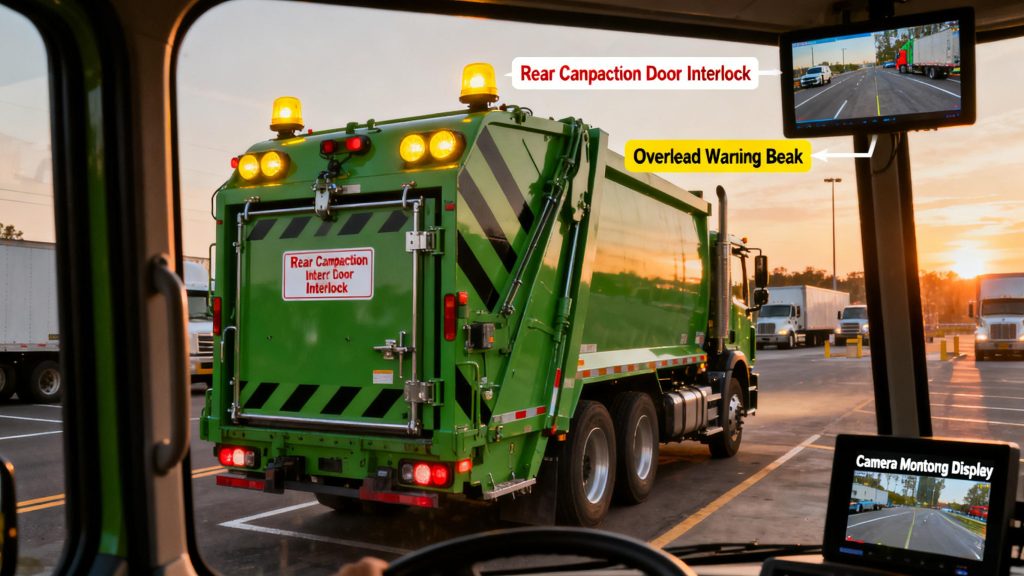
Common safety features include:
- Dual-side emergency stop switches
- Overload pressure protection valves
- Anti-drop locking cylinders
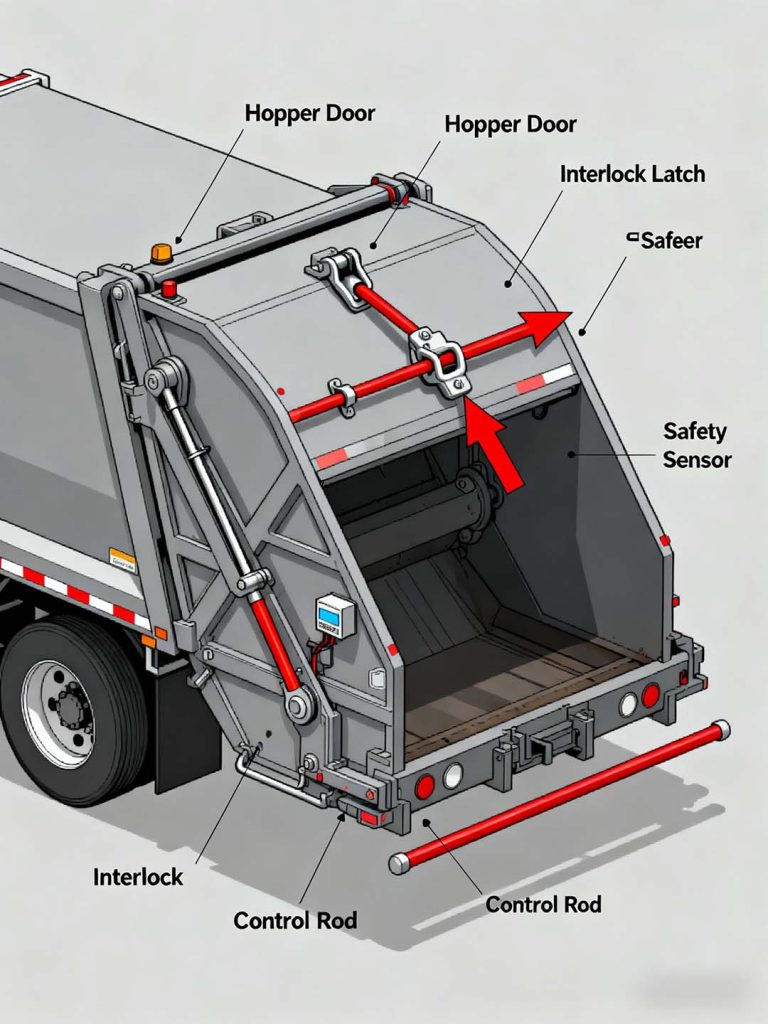
- Hopper door interlock systems
- Control isolation switches for maintenance operations
These systems reduce the risk of accidental activation and improve operator safety during loading and servicing.
Best Practices to Extend Compactor Service Life
Daily and periodic maintenance plays a critical role in safe operation:
- Clean the hopper daily to prevent material buildup
- Lubricate slide rails according to the service schedule
- Drain moisture from hydraulic oil in humid environments
- Replace filters before flow restriction affects performance
- Monitor hydraulic oil temperature during extended shifts
For a deeper technical explanation of how hydraulic output affects compaction force and efficiency, see:
👉 hydraulic system of garbage truck compactor
Final Notes on Safe Operation
Consistent safety awareness and correct operating habits significantly reduce failure rates and operating costs. Choosing a reliable compactor design and following proven operational principles ensures smoother cycles, safer working conditions, and longer service life for both equipment and crew.