Garbage Truck Compactor Maintenance Checklist for Long-Term Reliability
Garbage truck compactors are designed for heavy-duty, repetitive work under harsh conditions. However, even the most robust compactor systems will experience performance degradation if maintenance is neglected. For municipal fleets, private waste contractors, and export markets, a structured maintenance checklist is essential to ensure long-term reliability, operational safety, and predictable operating costs.
This guide outlines a practical, experience-based garbage truck compactor maintenance checklist, focusing on daily inspections, hydraulic system care, structural wear prevention, and long-term service planning.
Why Preventive Maintenance Matters for Garbage Truck Compactors
Compactor failures rarely occur suddenly. In most cases, they are the result of small, cumulative issues such as minor hydraulic leaks, insufficient lubrication, or unnoticed structural wear. Preventive maintenance allows operators to identify these issues early, reducing unplanned downtime and extending the service life of critical components.
For a complete understanding of how compactor systems function as a whole, this garbage truck compactor guide explains how structure, operation, and maintenance are interconnected.
Daily Maintenance Checklist (Operator-Level)
Daily checks should be performed before the compactor enters service. These inspections take only a few minutes but can prevent serious failures.
Visual Inspection of Hydraulic Components
Operators should visually inspect all exposed hydraulic hoses, fittings, and cylinders for oil residue, cracks, or abnormal movement. Any sign of leakage should be reported immediately.
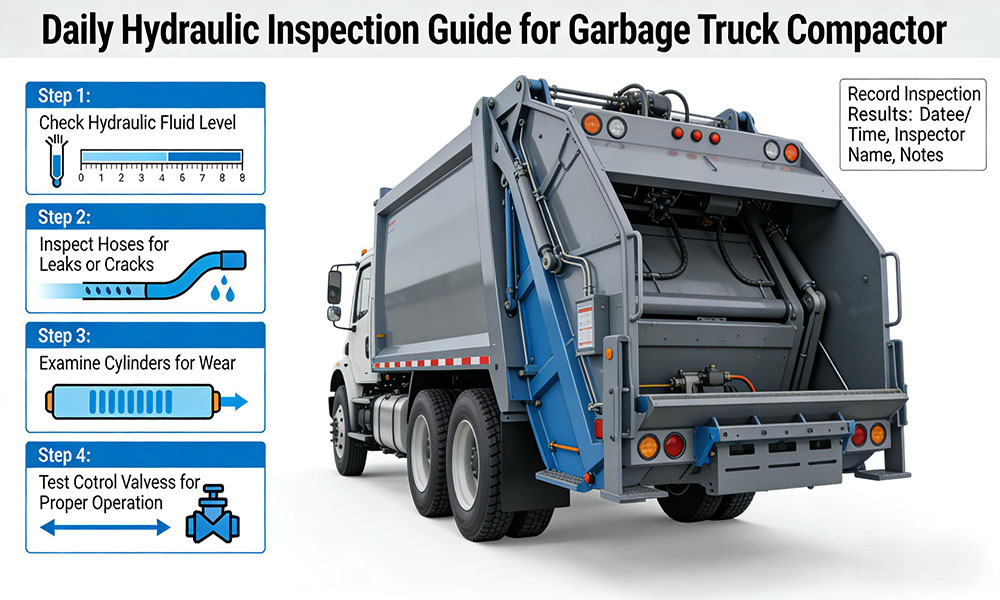
Hydraulic oil loss not only reduces compaction force but can also introduce air into the system, causing erratic movement and increased wear on pumps and valves.
Check Compactor Body and Tailgate Area
The compactor body, tailgate hinges, and locking mechanisms should be inspected for visible deformation or loose fasteners. Tailgate seals must remain intact to prevent waste leakage during transport.
Issues in this area are often linked to structural design and component layout, which are explained in detail in this garbage truck compactor structure overview.
Weekly Maintenance Tasks (Mechanical Focus)
Weekly maintenance should be performed by trained technicians or maintenance staff and focuses on reducing mechanical wear.
Lubrication of Slide Rails and Pivot Points
Slide rails, compaction plate guides, and pivot points must be lubricated according to manufacturer specifications. Insufficient lubrication increases friction, leading to accelerated wear and misalignment.
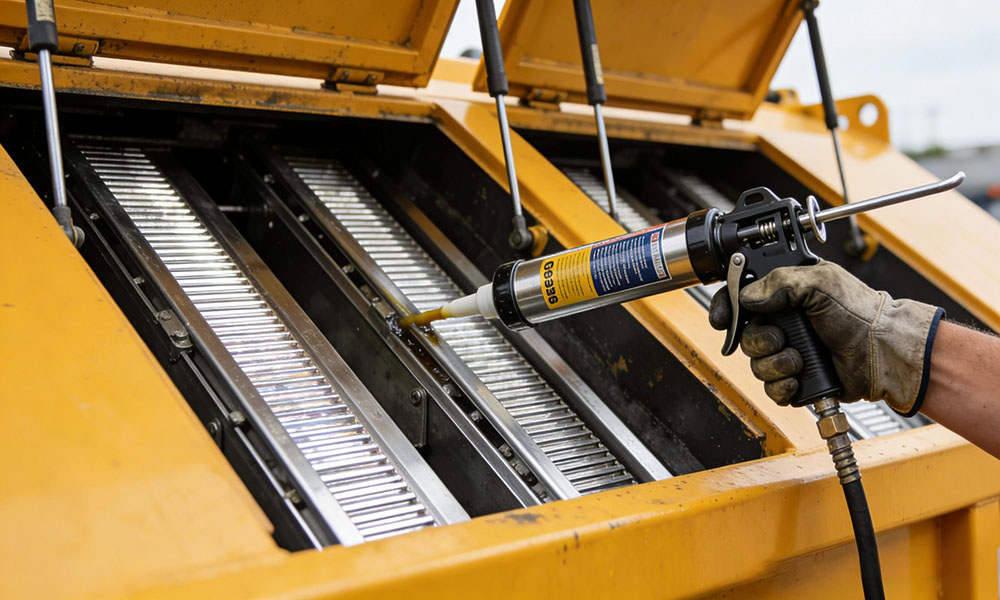
Using the correct grease type is critical, especially in high-temperature or dusty environments.
Fastener and Structural Inspection
All major fasteners, especially those around the compactor frame and tailgate, should be checked for torque and alignment. Loose fasteners can lead to vibration-related fatigue cracks over time.
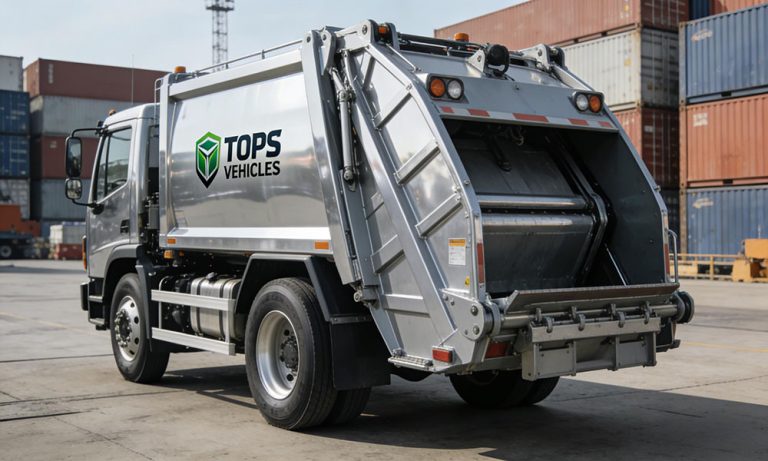
Manufacturers such as Tops Vehicles reinforce high-stress areas and design compactors with maintenance accessibility in mind, reducing inspection time and long-term structural risk.
Monthly and Periodic Hydraulic System Maintenance
The hydraulic system is the core of compactor performance and requires systematic care.
The hydraulic system is the core of compactor performance and requires systematic care.
Hydraulic oil should be checked for contamination, discoloration, or excessive heat exposure. Filters must be replaced based on operating hours rather than calendar intervals, especially for high-duty fleets.
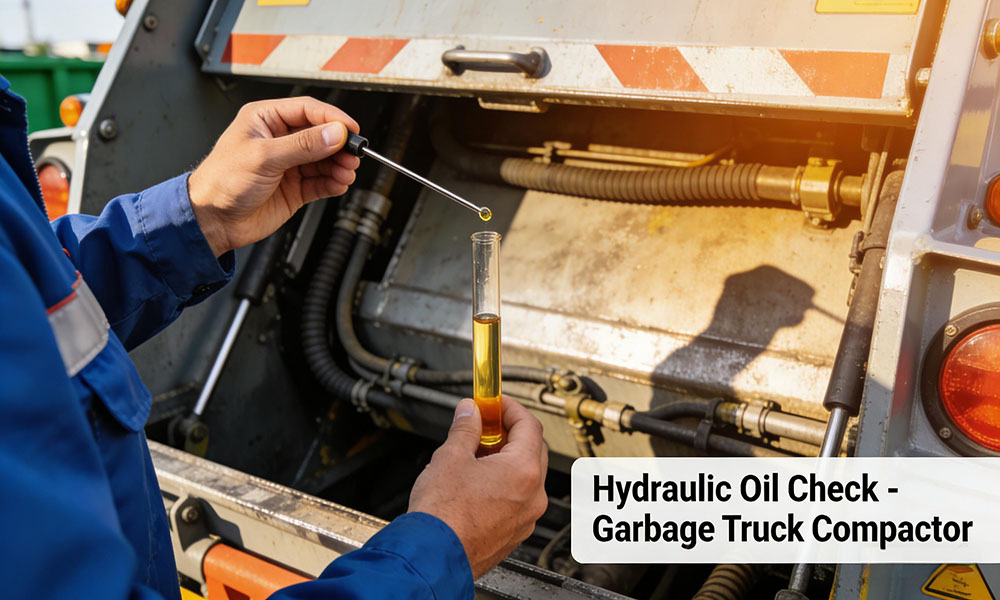
Poor oil quality is one of the leading causes of compactor hydraulic failure, as discussed further in this compactor hydraulic failure analysis.
Pressure and Cycle Performance Monitoring
Technicians should periodically monitor system pressure and cycle time consistency. Abnormal pressure spikes or slow cycle response often indicate internal valve wear or pump inefficiency.
Understanding how pressure relates to real-world compaction efficiency is explained in this garbage truck compactor power and performance guide.
Seasonal and Environmental Maintenance Considerations
Operating environments significantly affect maintenance priorities.
Cold Climate Operation
In cold regions, hydraulic oil viscosity must be suitable for low temperatures to prevent sluggish operation or pump cavitation during startup.
Hot and Humid Environments
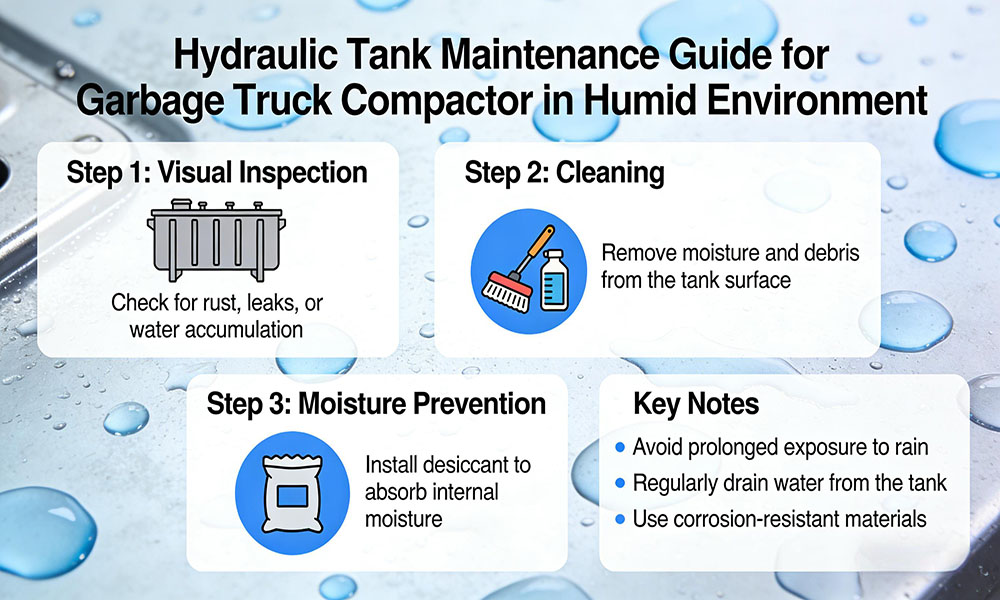
High humidity increases the risk of water condensation in hydraulic tanks. Regular draining and moisture control are essential to prevent corrosion and internal damage.
Maintenance Documentation and Long-Term Planning
Maintenance effectiveness depends not only on execution but also on documentation. Keeping detailed service records allows fleet managers to identify recurring issues, optimize service intervals, and plan component replacements proactively.
Reliable manufacturers often provide detailed maintenance manuals and long-term technical support. Tops Vehicles, for example, designs its garbage truck compactors for export markets where long service intervals and predictable maintenance costs are critical.
Maintenance Is a System, Not a Task
Garbage truck compactor maintenance should be viewed as an integrated system rather than isolated tasks. Daily inspections, scheduled lubrication, hydraulic care, and environmental considerations all contribute to long-term reliability.
For fleet operators seeking a complete understanding of compactor selection, operation, and lifecycle management, the central garbage truck compactor guide serves as the foundation of this knowledge hub.