Garbage Truck Capacity Guide: How to Choose the Right Size
Choosing the right garbage truck capacity is one of the most important decisions in waste management operations. A truck that is too small will require frequent trips, increasing fuel and labor costs. On the other hand, a truck that is too large may lead to unnecessary investment and reduced efficiency in narrow or low-density areas.
In real-world projects, especially in developing regions, selecting the correct capacity directly impacts operational cost, route efficiency, and long-term maintenance. This guide explains how garbage truck capacity works and how to choose the right size based on practical conditions.
What Does Garbage Truck Capacity Mean?
Garbage truck capacity usually refers to the volume of waste the truck can hold, measured in cubic meters (m³). It does not simply represent how much loose waste can be loaded, but how much compressed waste the truck can carry after compaction.
For example, a 10m³ garbage truck does not just carry 10 cubic meters of loose waste. With a compaction ratio of 2:1 or higher, it can effectively handle much more material per trip.
Understanding how compaction affects capacity is essential. A more detailed explanation of this process can be found in this guide on how garbage truck compactor works.
Common Garbage Truck Capacity Ranges
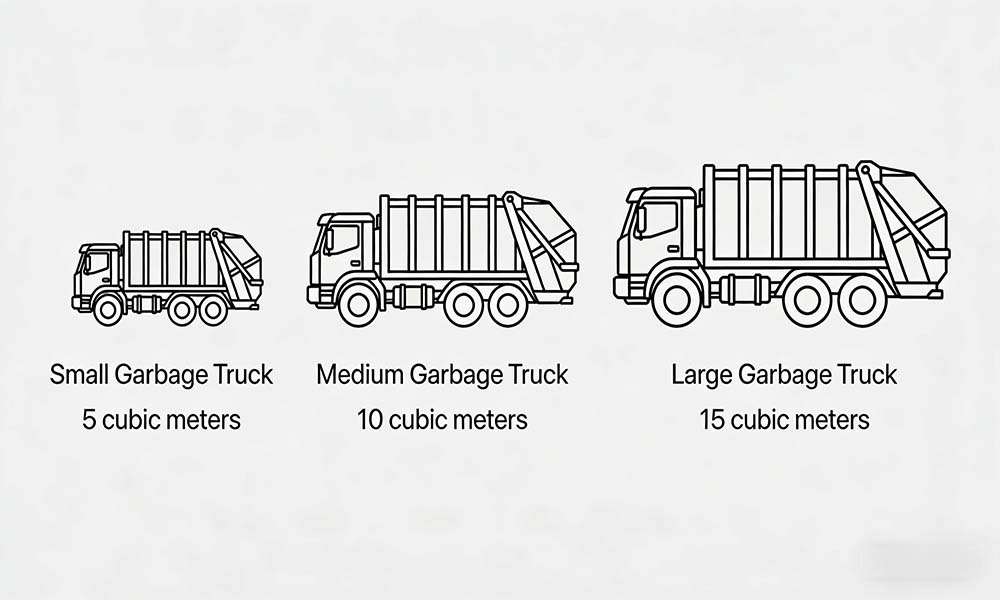
Garbage trucks are generally divided into three main capacity categories based on their volume and application.
Small Capacity (3–6 m³)
Small garbage trucks are typically used in:
- Narrow streets
- Residential communities
- Rural or low-density areas
They are easy to maneuver and cost-effective, but require more trips for large-scale waste collection.
Medium Capacity (8–12 m³)
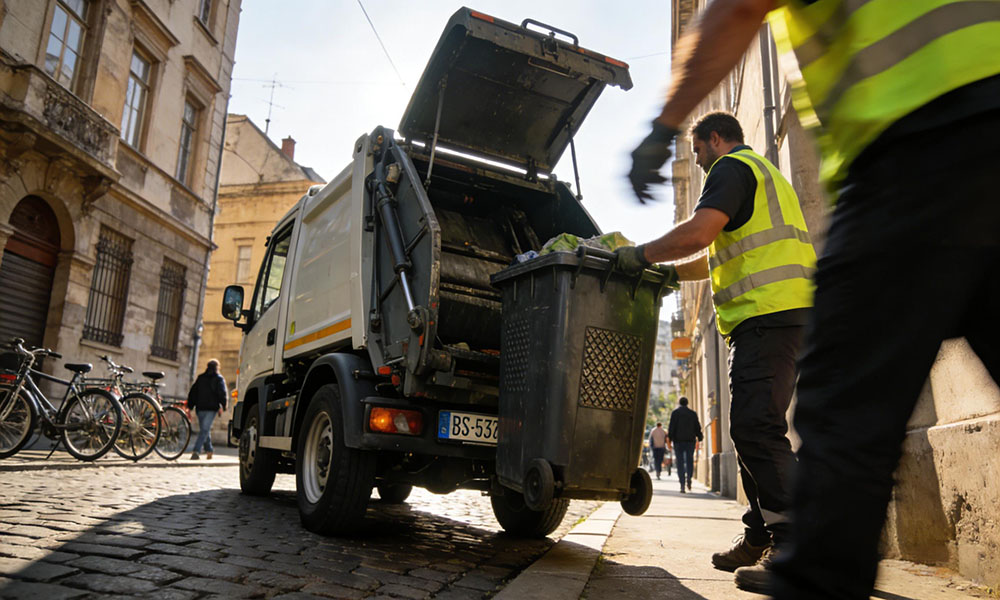
Medium-sized trucks are the most widely used category. They offer a balance between capacity and flexibility.
Typical use cases include:
- Urban residential waste collection
- Municipal sanitation departments
- Mixed waste routes
Many cities rely on this size as their primary collection vehicle.
Large Capacity (14–20 m³)
Large garbage trucks are designed for high-volume operations such as:
- Industrial zones
- Long-distance collection routes
- High-density urban areas
While they reduce the number of trips required, they may not be suitable for areas with limited road access.
If you are evaluating available options, comparing different models on a garbage truck for sale page can help you understand how capacity affects pricing and configuration.
How to Choose the Right Capacity
Selecting the correct garbage truck capacity depends on several practical factors rather than just choosing the largest option available.
1.Waste Volume Per Day
Estimate how much waste is generated daily in your service area. This is the most important factor in determining capacity.
2.Collection Frequency
If waste is collected daily, a smaller truck may be sufficient. If collection happens every few days, a larger capacity is required.
3.Road Conditions
In areas with narrow roads or poor infrastructure, smaller trucks are often more efficient despite their lower capacity.
4.Labor and Fuel Costs
Larger trucks reduce trips but consume more fuel and may require higher maintenance. Smaller trucks increase trips but are easier to operate.
Real-World Example: Choosing Capacity for African Cities
In many African cities, waste collection conditions vary significantly between urban centers and suburban areas.
- In dense city centers, medium-sized trucks (8–12 m³) are often the best choice
- In suburban or developing areas, smaller trucks are more practical
- For landfill transport, large-capacity trucks are preferred
For buyers targeting these markets, reviewing configurations of rear loader garbage truck models can help match capacity with local conditions.

Common Mistakes When Choosing Capacity
Many buyers make similar mistakes when selecting garbage truck capacity:
- Choosing the largest truck without considering road conditions
- Ignoring compaction ratio
- Underestimating daily waste volume
- Not considering maintenance and spare parts availability
Avoiding these mistakes can save significant costs in the long run.
How Capacity Affects Garbage Truck Price
Capacity is one of the main factors influencing price. Larger trucks require:
- More steel and materials
- Stronger hydraulic systems
- Higher transportation costs
If you are comparing budgets, reviewing a detailed compactor truck price breakdown can provide better insight into cost differences.
FAQ About Garbage Truck Capacity
What is the most common garbage truck capacity?
The most commonly used capacity worldwide is between 8 and 12 cubic meters, as it offers a balance between efficiency and flexibility.
Is a larger garbage truck always better?
Not necessarily. Larger trucks are more efficient for high-volume routes, but they may not be suitable for narrow streets or areas with limited access.
How does compaction ratio affect capacity?
A higher compaction ratio allows the truck to carry more waste in the same volume, effectively increasing its working capacity without increasing size.
What capacity is best for small cities?
For small cities or towns, trucks between 5 and 8 cubic meters are usually sufficient, depending on waste generation and collection frequency.