Garbage Truck Maintenance Checklist: Reduce Costs & Downtime
Garbage trucks operate under some of the most demanding conditions in the transport industry. Daily exposure to heavy loads, frequent stops, corrosive waste, and harsh environments means that regular maintenance is not optional—it is essential.
A well-structured maintenance checklist helps prevent unexpected breakdowns, reduces long-term repair costs, and ensures consistent performance. For fleet managers and operators, having a clear routine can make a significant difference in operational efficiency.
Why Regular Maintenance Matters
Skipping maintenance may seem like a way to save time or money in the short term, but it often leads to higher costs later. Garbage trucks rely heavily on hydraulic and compaction systems, which can fail quickly if not properly maintained.
Regular maintenance helps:
- Prevent sudden breakdowns
- Extend the lifespan of key components
- Improve fuel efficiency
- Maintain safe operation
Understanding how critical systems function is the first step. If you want to better understand the working mechanism behind compaction systems, reviewing how garbage truck compactor works can provide useful background.
Daily Maintenance Checklist
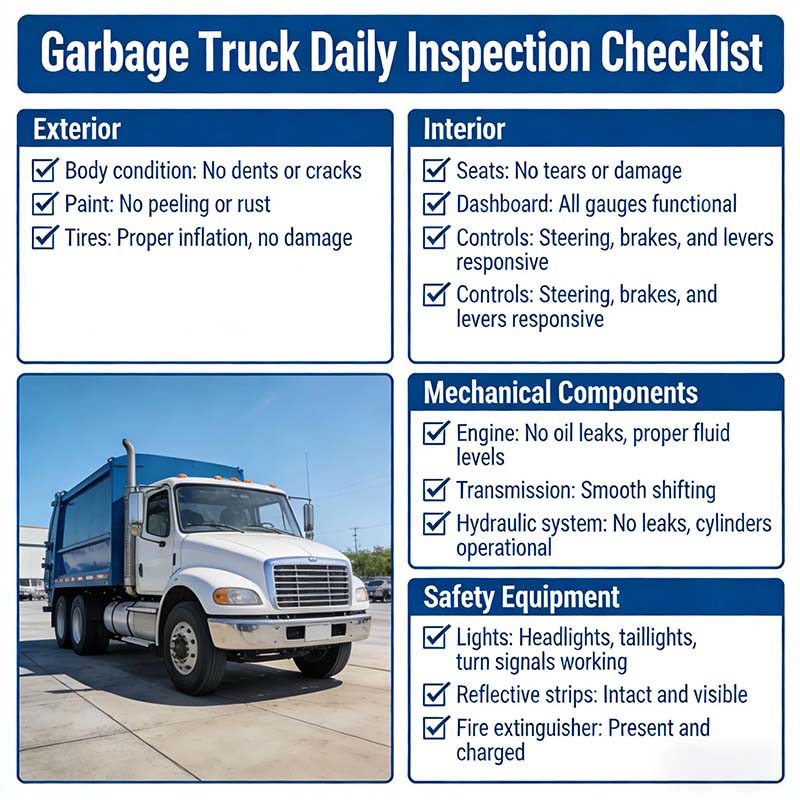
Daily inspections should be carried out before and after operation. These checks are simple but highly effective in preventing major issues.
Visual Inspection
Start with a basic walk-around inspection:
- Check for oil leaks under the truck
- Inspect tires for wear or damage
- Ensure lights and signals are working
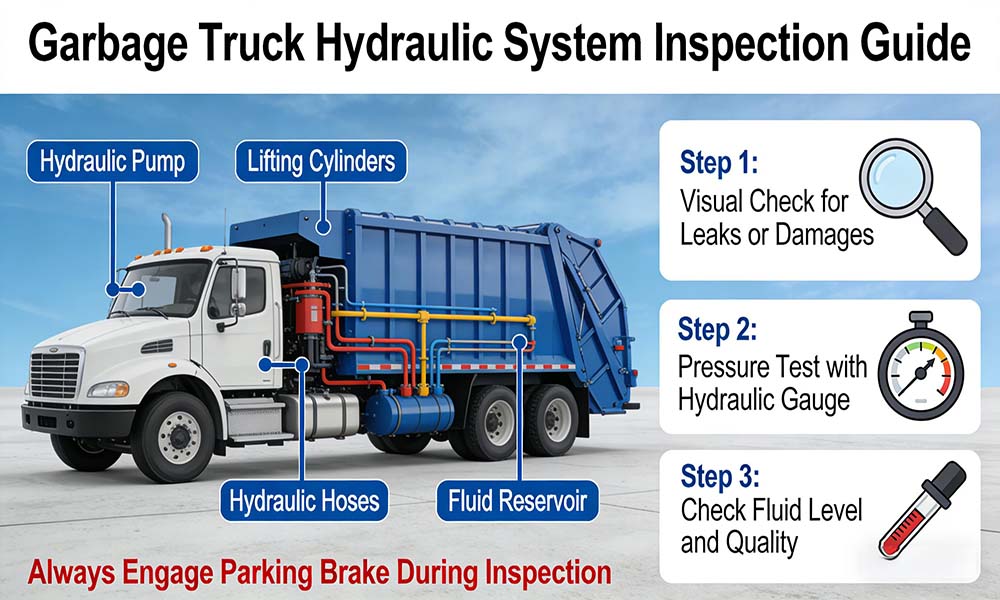
Hydraulic System Check
The hydraulic system should be checked daily because it directly affects compaction and lifting operations.
- Inspect hydraulic hoses for cracks
- Check oil levels
- Look for signs of leakage
Compactor Function Test
Before starting the route, test the compactor to ensure it operates smoothly:
- Run a short compaction cycle
- Listen for unusual noise
- Check for slow movement
Proper usage also depends on choosing the correct capacity. Overloading the truck can damage the compactor, which is why understanding limits in a garbage truck capacity guide is important for daily operations.
Weekly Maintenance Checklist
Weekly maintenance focuses on deeper inspection and preventive actions.
Lubrication
All moving parts should be properly lubricated to reduce friction and wear.
- Lubricate hinges and joints
- Apply grease to moving mechanisms
- Check for dry or rusted components
Fastener Inspection
Due to vibration and heavy use, bolts and fasteners may loosen over time.
- Tighten loose bolts
- Inspect structural joints
- Check mounting points
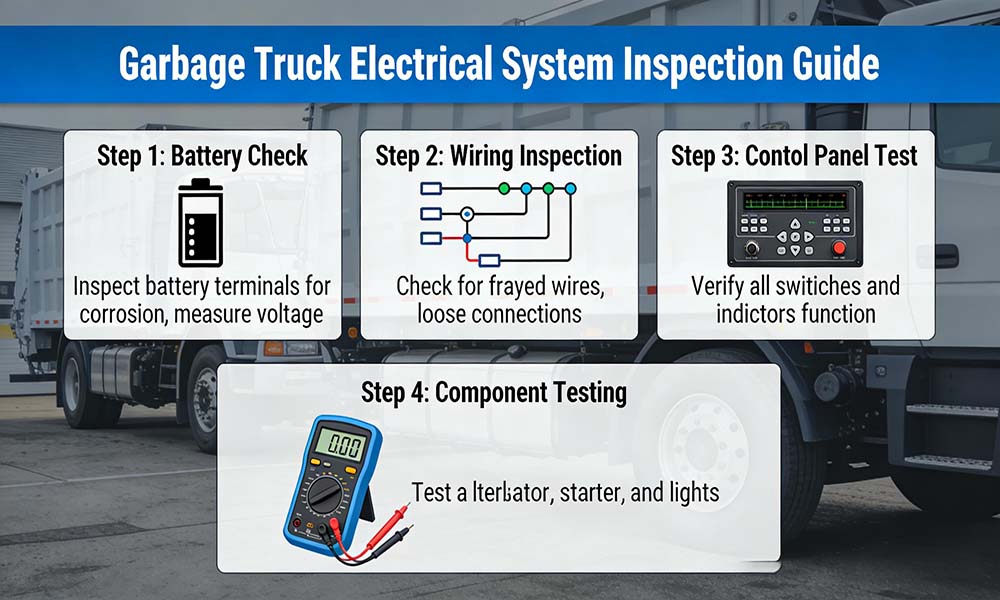
Electrical System Check
- Inspect wiring for damage
- Test control panels
- Ensure sensors are functioning properly
Monthly Maintenance Checklist
Monthly maintenance involves more detailed inspection and servicing.
Hydraulic Oil Replacement
Hydraulic oil quality directly affects system performance.
- Replace contaminated oil
- Clean filters
- Check oil pressure
Structural Inspection
- Inspect the truck body for corrosion
- Check compactor plates for wear
- Examine sealing systems
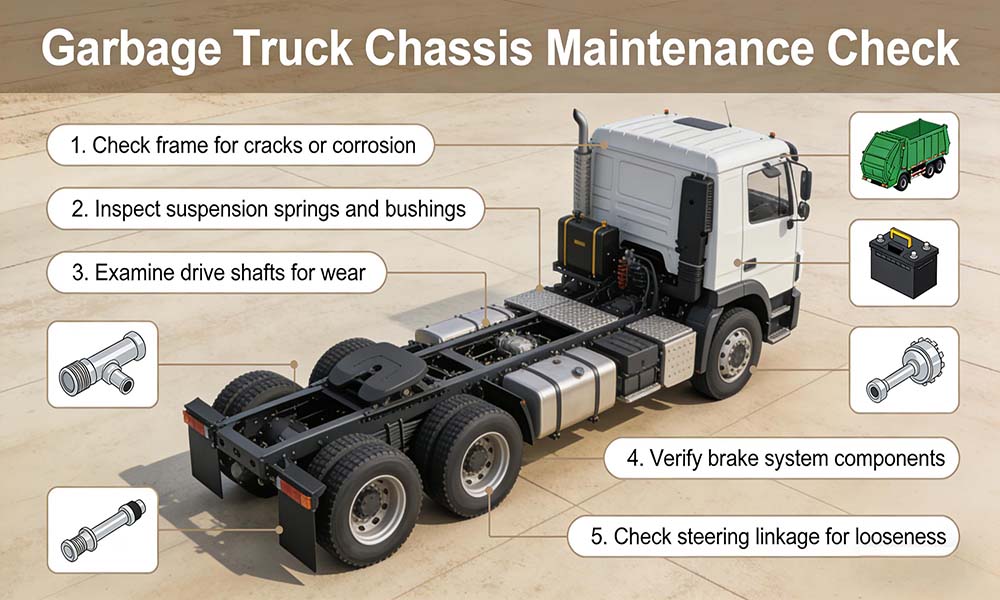
Brake and Suspension System
- Inspect brake pads
- Check suspension components
- Ensure safe driving conditions
Choosing a durable and well-built truck from the beginning can significantly reduce maintenance frequency. Reviewing available configurations on a garbage truck for sale page can help buyers understand build quality differences.
Seasonal Maintenance Considerations
Different climates require different maintenance strategies.
Hot Climate
- Monitor engine temperature
- Prevent hydraulic oil overheating
- Check cooling systems
Cold Climate
- Use suitable hydraulic oil
- Prevent freezing in systems
- Check battery performance
Common Maintenance Mistakes to Avoid
Even experienced operators sometimes overlook important details.
Common mistakes include:
- Ignoring small leaks
- Delaying oil replacement
- Overloading the truck
- Skipping regular inspections
For example, using a truck beyond its designed configuration—especially in certain rear loading systems—can accelerate wear. Reviewing specifications of rear loader garbage truck models can help operators better understand proper usage limits.
Building an Effective Maintenance Routine
A checklist is only effective if it is consistently applied. For fleet operators, building a structured routine is essential.
Recommended approach:
- Assign responsibility to trained personnel
- Keep maintenance records
- Schedule inspections in advance
- Monitor performance data
Consistency is more important than complexity. A simple routine followed regularly is far more effective than a detailed plan that is rarely executed.
Reducing Long-Term Maintenance Costs
Maintenance is not just about fixing problems—it is about preventing them.
Practical strategies:
- Use high-quality spare parts
- Train operators properly
- Avoid overloading
- Choose reliable suppliers
Investing in quality equipment and proper maintenance practices can significantly reduce total cost of ownership over time.