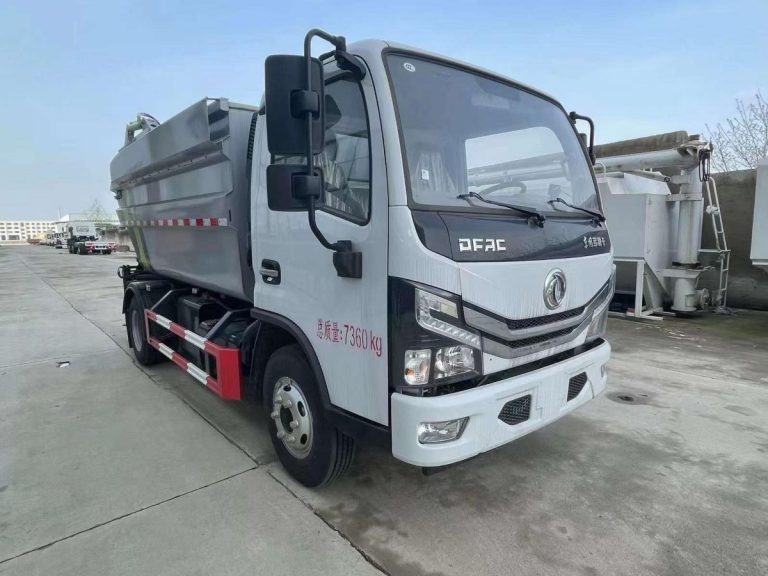
Garbage Truck Types Explained: Choose the Right One
Garbage trucks come in different types, each designed for specific waste collection environments and operational needs. Choosing the right type is essential for improving efficiency, reducing costs, and ensuring smooth operations.
For municipalities, contractors, and private waste management companies, understanding the differences between garbage truck types helps in selecting the most suitable vehicle for their projects.
Main Types of Garbage Trucks
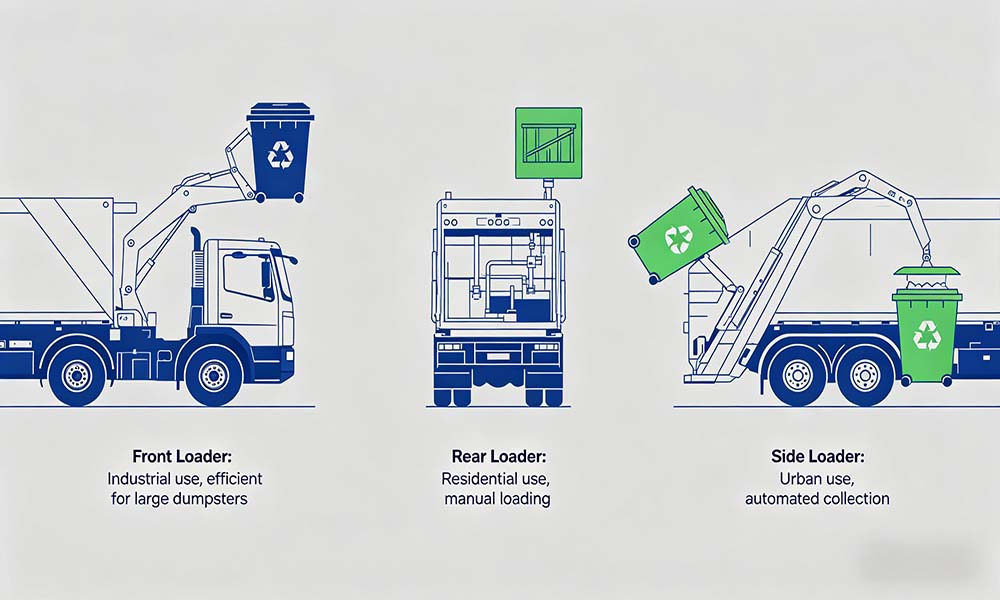
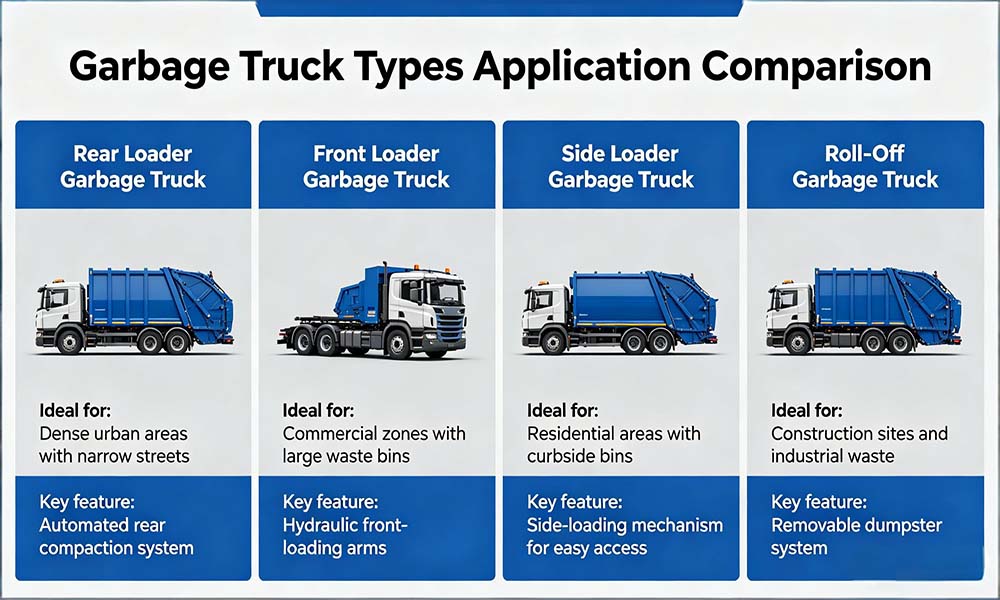
Garbage trucks can be broadly classified into three main types based on their loading method.
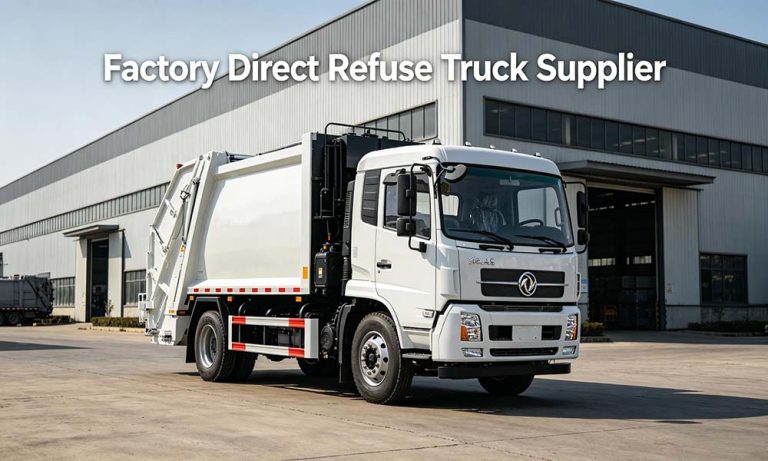
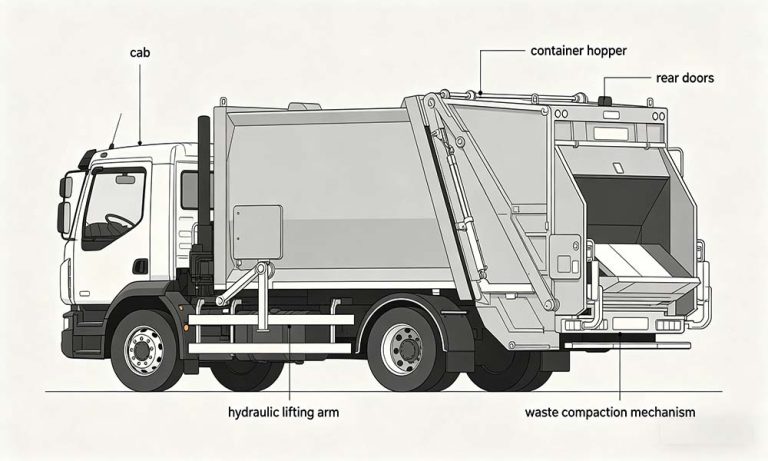
Rear Loader Garbage Trucks
Rear loader garbage trucks are the most widely used type worldwide. They are designed for flexibility and can handle various types of waste.
Key features:
- Manual or semi-automatic loading
- Suitable for mixed waste
- Lower cost compared to other types
Typical applications:
- Residential areas
- Small to medium cities
- Developing markets
Buyers looking for flexible solutions often explore rear loader garbage truck applications to understand how this type performs in different environments.

Front Loader Garbage Trucks
Front loader garbage trucks are commonly used for commercial waste collection. They are equipped with hydraulic arms to lift large containers.
Key features:
- Automated container lifting
- High efficiency
- Suitable for bulk waste
Typical applications:
- Commercial areas
- Industrial zones
- Large facilities
Buyers evaluating commercial waste solutions often review front loading garbage truck advantages to compare efficiency and performance.
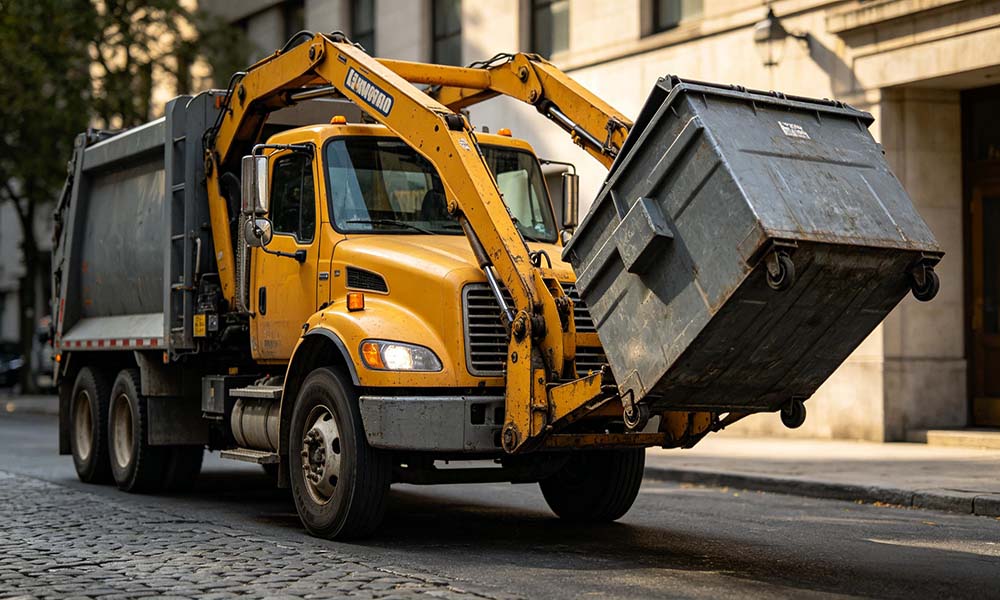
Side Loader Garbage Trucks
Side loader garbage trucks are designed for automated waste collection and can be operated by a single driver.
Key features:
- Fully automated operation
- Reduced labor requirements
- High efficiency
Typical applications:
- Developed urban areas
- Standardized waste systems
- Smart city projects
Buyers interested in automation often explore side loading garbage truck features to better understand system capabilities.
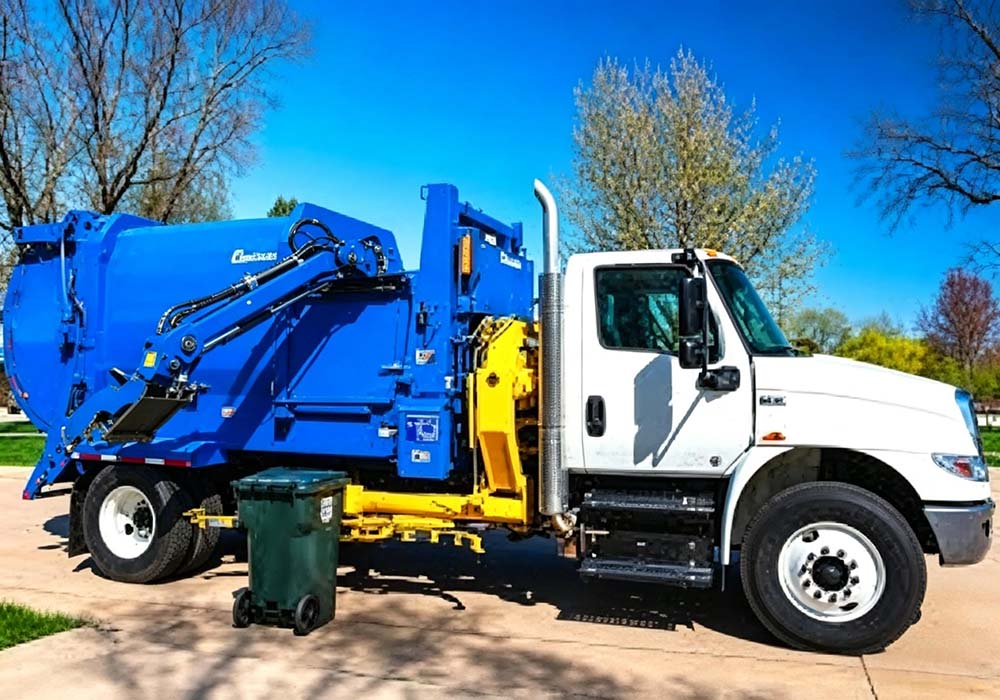
Other Specialized Garbage Truck Types
In addition to the main categories, there are specialized garbage trucks designed for specific applications.
Hook Lift Garbage Trucks
Used for transporting detachable containers.
Roll-Off Trucks
Designed for large waste containers in construction and industrial sites.
Mini Garbage Trucks
Suitable for narrow streets and small communities.
Buyers exploring different configurations often review specialized garbage truck solutions to identify the best option for unique requirements.
Key Differences Between Garbage Truck Types
Understanding the differences helps buyers make better decisions.
Comparison factors:
- Loading method
- Labor requirements
- Efficiency
- Cost
- Application environment
Each type has its advantages and limitations, depending on operational needs.
Buyers often compare these factors using garbage truck type comparison guide to select the most suitable option.
How to Choose the Right Garbage Truck Type
Selecting the right type depends on several factors.
Waste Type
Different trucks handle different types of waste more efficiently.
Collection Environment
Urban, rural, or industrial environments require different solutions.
Labor Availability
Automated trucks reduce labor requirements.
Budget
Different types have different cost ranges.
Buyers often use a garbage truck selection strategy to align truck type with operational needs and budget.
Common Mistakes When Choosing a Type
Common issues include:
- Choosing based only on price
- Ignoring local conditions
- Selecting the wrong capacity
- Overlooking maintenance requirements
Avoiding these mistakes improves efficiency and reduces costs.
Why Understanding Garbage Truck Types Matters
Understanding garbage truck types helps buyers:
- Choose the right equipment
- Improve operational efficiency
- Reduce long-term costs
- Optimize waste collection systems
For many buyers, this knowledge is essential for making informed purchasing decisions.