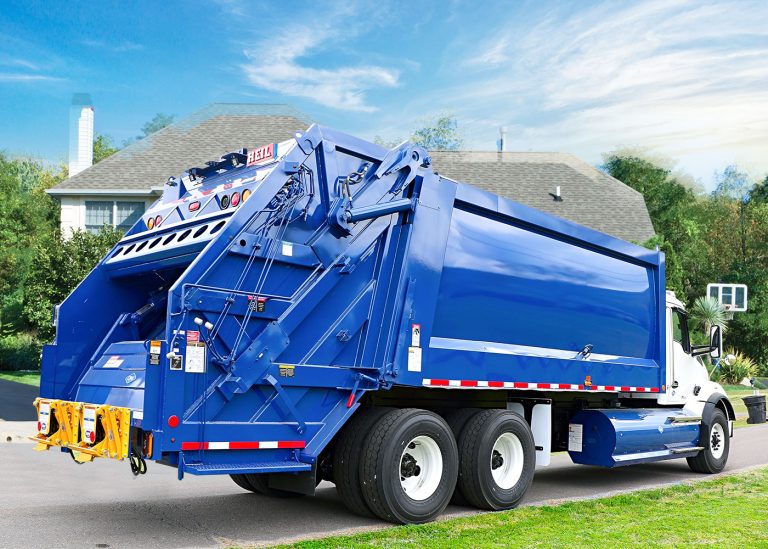
How a Garbage Truck Compactor Works From the Operator’s Perspective
Most buyers understand the mechanical and hydraulic design behind a garbage truck compactor, but few know how the system actually operates during daily waste collection. In real conditions, an efficient garbage compactor depends on smooth operator workflow, safety sensors, automation logic, and precise timing. This article explains how a garbage truck compactor works step by step—from loading to compression and discharge—based on how operators use the controls in the field.
Step 1 — Loading Waste into the Hopper
The compaction process begins when the crew places waste bags or bins into the rear hopper. Modern rear loader garbage trucks include reinforced hopper edges and anti-spill profiles that keep the waste stable before compaction begins.
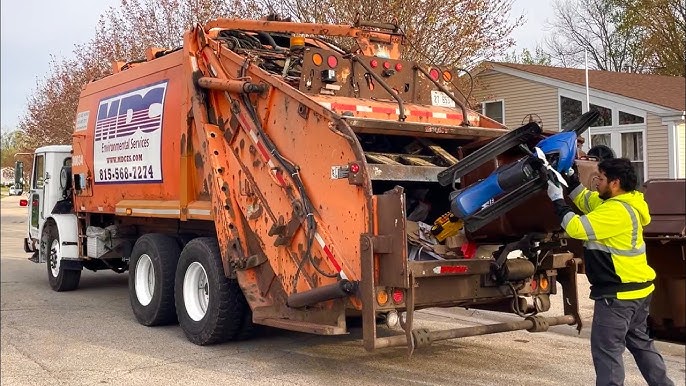
Some models also support bin lifters, allowing operators to lift 120L, 240L, or 360L bins with minimal effort. This helps improve efficiency for municipal routes and commercial waste collection.
Step 2 — Activating the Compaction Cycle
After loading, the operator presses a control button located either on the rear panel or inside the cabin. This triggers the automated compaction cycle.
Once activated, the system performs:
- Blade position check
- Hopper door sensor check
- Hydraulic pressure readiness check
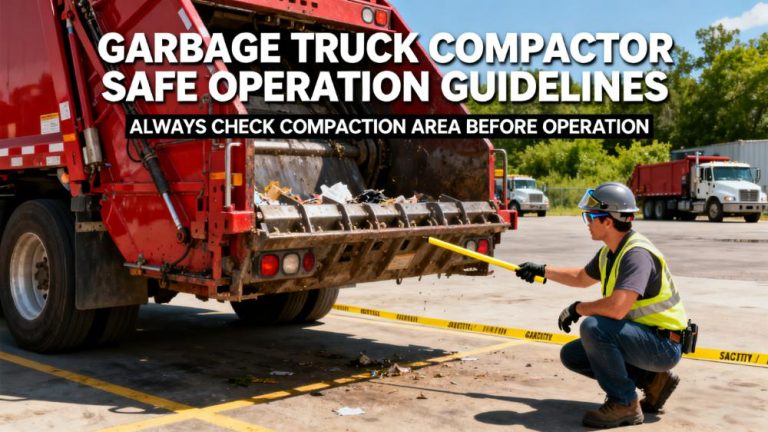
Only when all signals are correct will the compactor blade begin moving. This protects both operators and the machine.
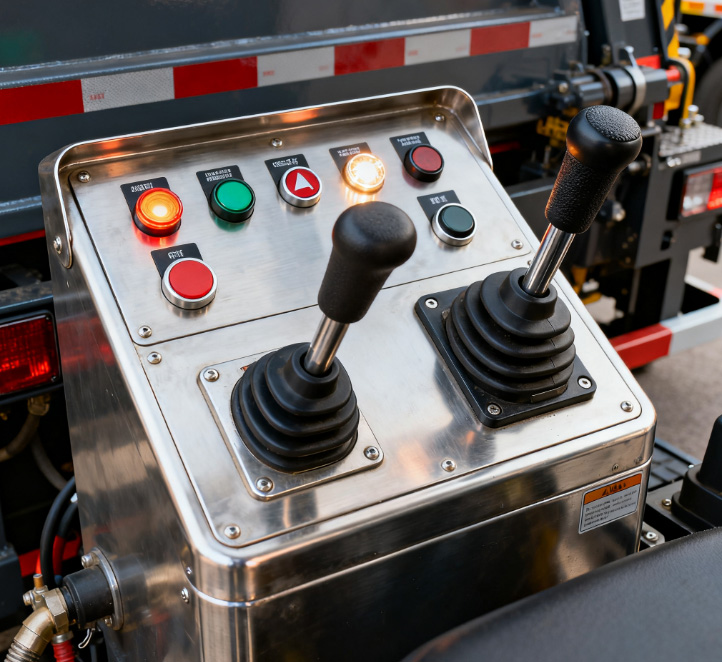
Step 3 — The Packing Blade Sweeps Waste Into the Body
When the compaction cycle starts, the packing blade moves downward and forward, sweeping loose waste into the truck body. The motion is controlled through a programmed sequence that ensures consistent compaction density without sudden pressure peaks.
During this stage, sensors continuously monitor:
- Cylinder stroke length
- Blade angle
- Hydraulic pressure
- Packing chamber fill level
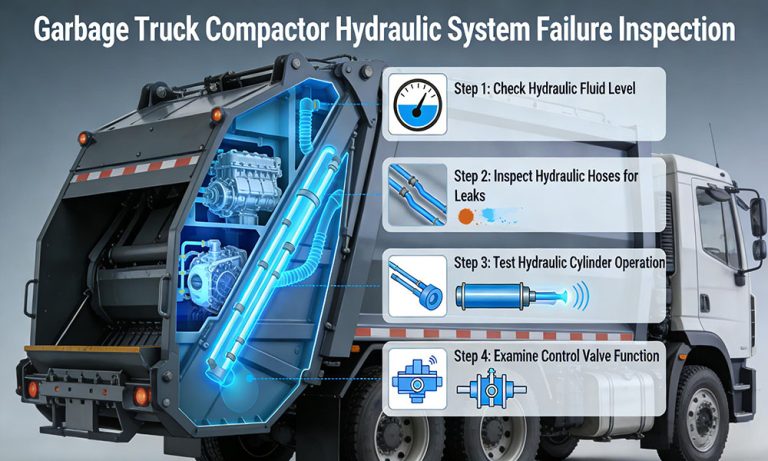
These sensors help prevent jams and protect the hydraulic circuit.

Step 4 — Secondary Compression for Higher Density
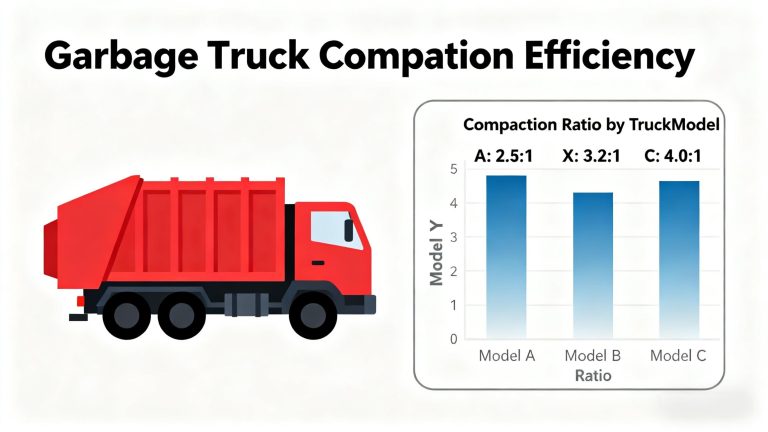
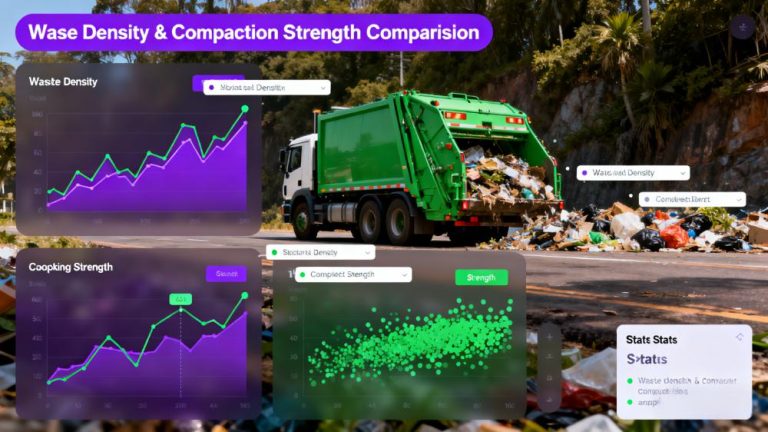
Most rear loader compactor trucks use a two-stage compression cycle. After the first sweep pushes waste inside, a second stroke applies higher force to achieve maximum compaction ratio. This process reduces the number of daily collection trips and improves payload efficiency.
Because buyers often compare compaction performance, this step is a key factor when choosing a garbage compactor truck for municipal or private waste management.
Step 5 — Automatic Return to Ready Position
Once compression is complete, the packing blade returns automatically to its starting position. The control system uses limit switches or magnetic sensors to ensure the blade rests safely before workers load the next batch.
This automation improves the operator’s workflow and reduces the chance of human error.
Step 6 — Full-Load Discharge at the Disposal Site
When the truck reaches the landfill or transfer station, the operator activates the rear discharge system. Depending on the model, the vehicle may use:
- Full-body ejection panel
- Hydraulic tailgate lift
- Sliding compaction plate discharge
This final step clears the compactor body quickly so the truck can return to the route.

Why Operator Workflow Matters for Compaction Performance
The way a garbage truck compactor works is not only about hydraulic power. Operator workflow, safety systems, and sensor-based automation all influence performance. A well-designed compactor helps crews work faster, reduces fatigue, and ensures long-term durability.
Understanding this process helps buyers evaluate different rear loader compactor models and choose the correct specifications for their market.