Garbage Truck Compactor Guide: Structure, Operation, Safety, and Applications
Garbage truck compactors play a critical role in modern waste collection systems. By compressing waste into a smaller volume, compactors reduce transportation frequency, improve route efficiency, and lower overall operating costs. Whether used on rear loader or side loader garbage trucks, the compactor system directly affects performance, safety, and service life.
This guide provides a clear explanation of how garbage truck compactors are built, how they operate, and why proper operation matters for daily waste collection.
What Is a Garbage Truck Compactor?
A garbage truck compactor is a hydraulic-driven system installed inside the truck body. Its main purpose is to compress collected waste, increasing payload density while maintaining controlled movement for safety. Unlike open-body transport, compacted waste remains stable during driving and unloading.
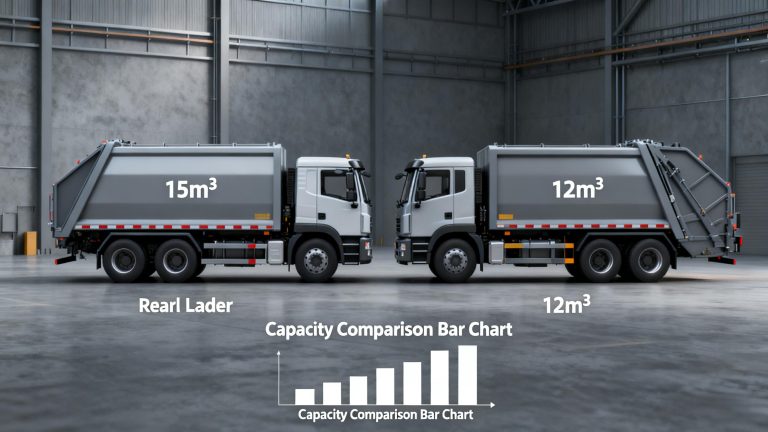
Compactors are commonly used on rear loader, side loader, and front loader garbage trucks, with design variations depending on loading method and waste type.
Main Components of a Garbage Truck Compactor
Although designs vary, most garbage truck compactors include several core components working together.
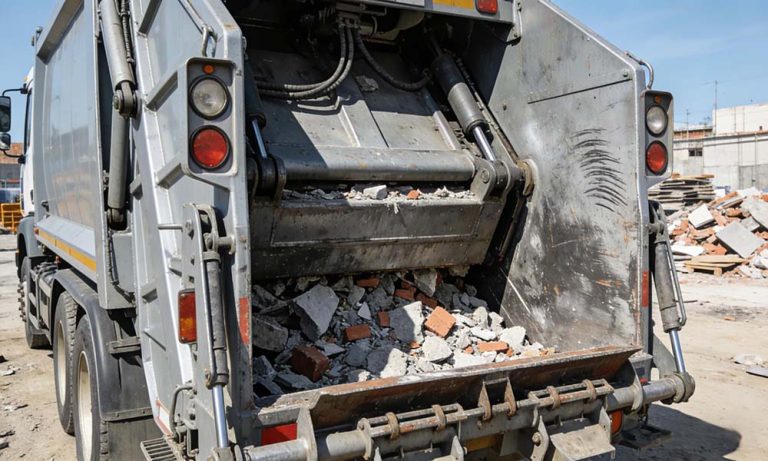
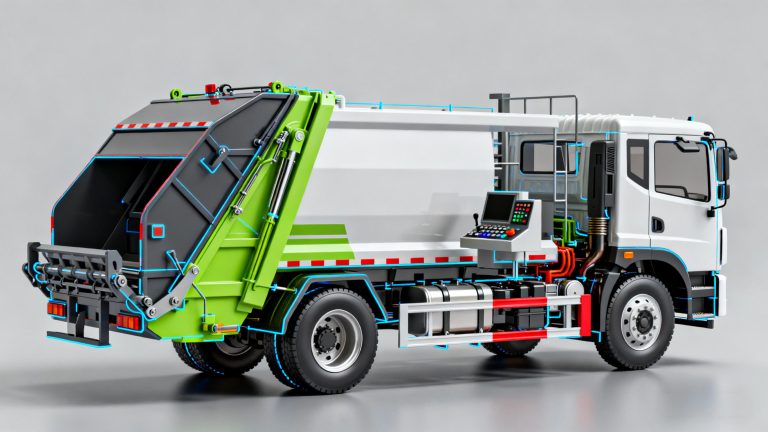
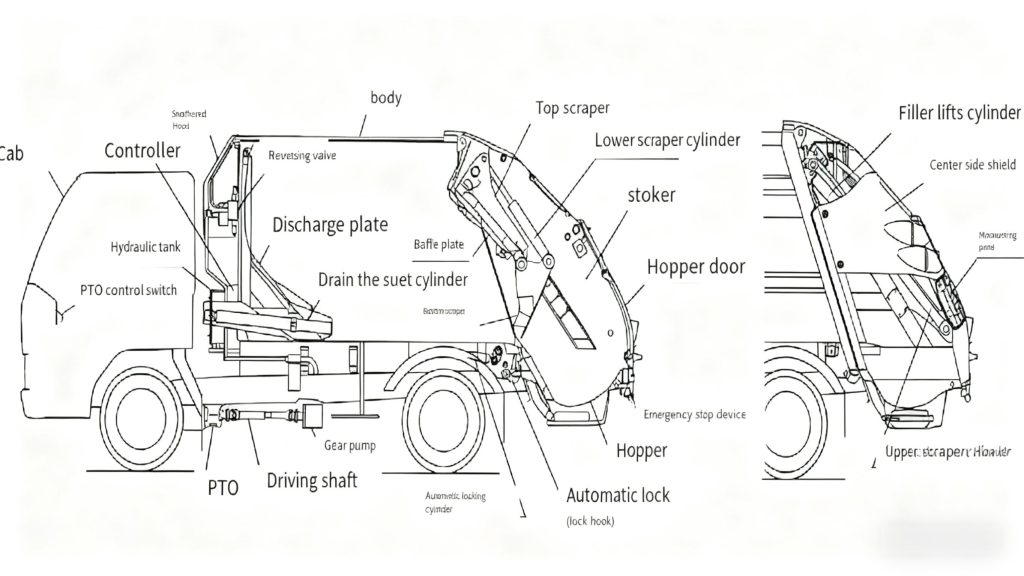
The hopper is the initial loading area where waste enters the system. From there, a compaction plate or blade pushes waste into the main body. Hydraulic cylinders provide the force needed for compression, while control valves regulate pressure and movement speed.
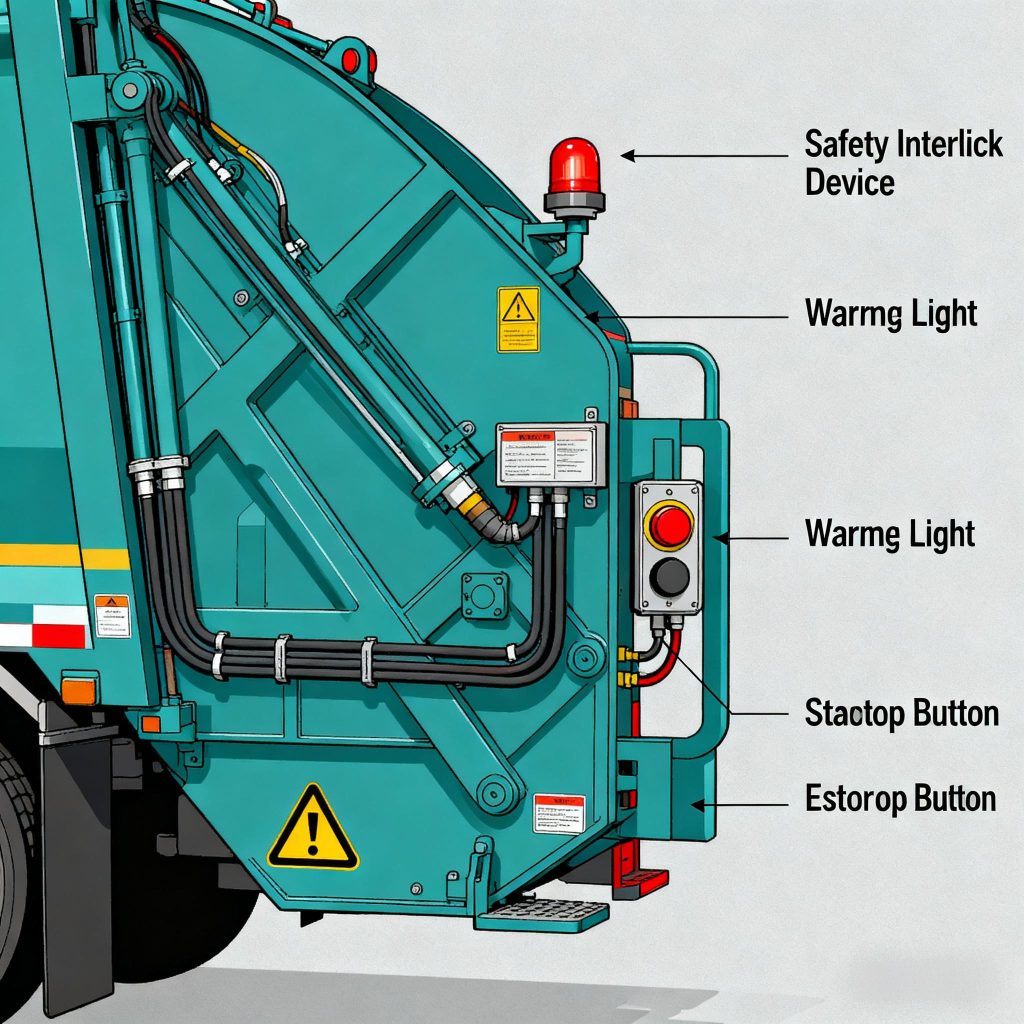
Safety mechanisms such as locking cylinders, pressure relief valves, and emergency stop systems are integrated to prevent uncontrolled motion during operation or maintenance.
How the Compaction Process Works
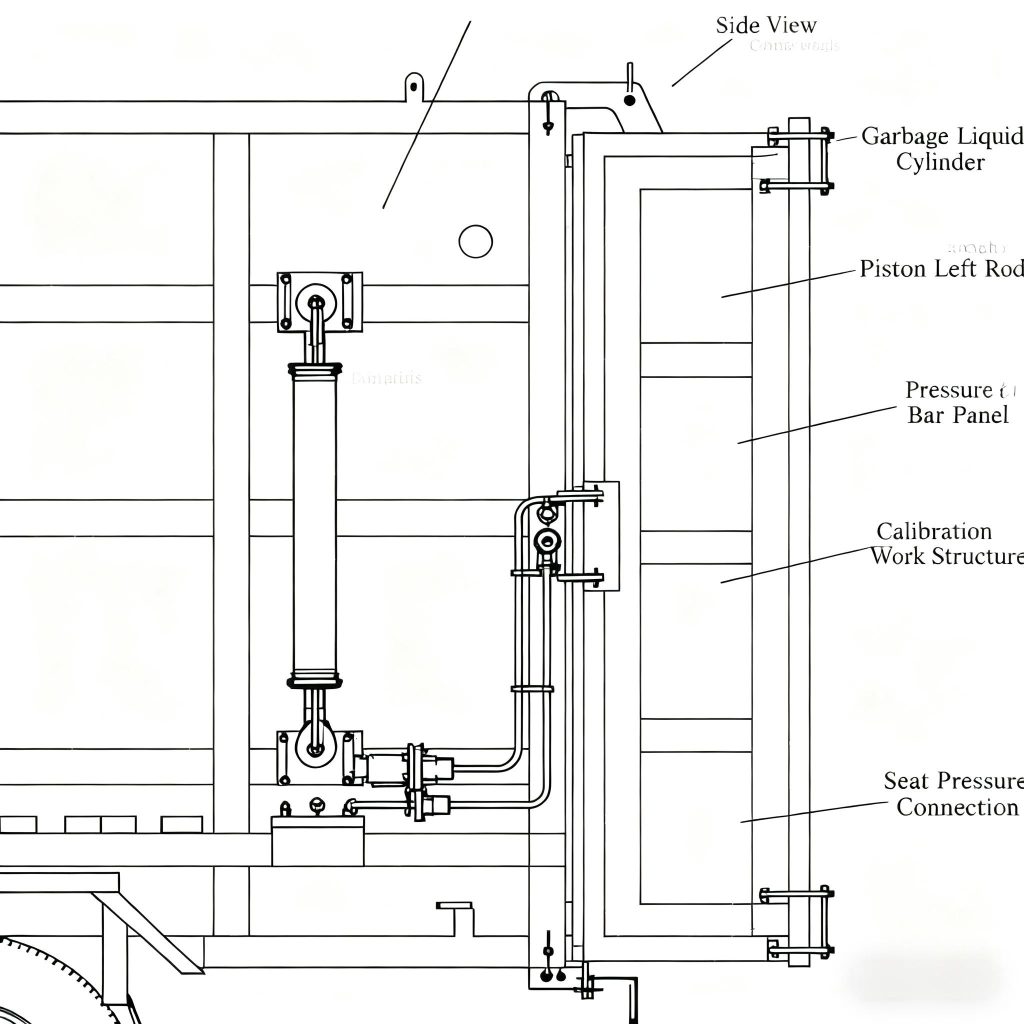
Once waste is loaded into the hopper, the operator activates the compaction cycle. Hydraulic cylinders extend, driving the compaction plate forward to push waste into the storage body. After reaching the preset pressure or stroke limit, the plate retracts, allowing the next load to enter.
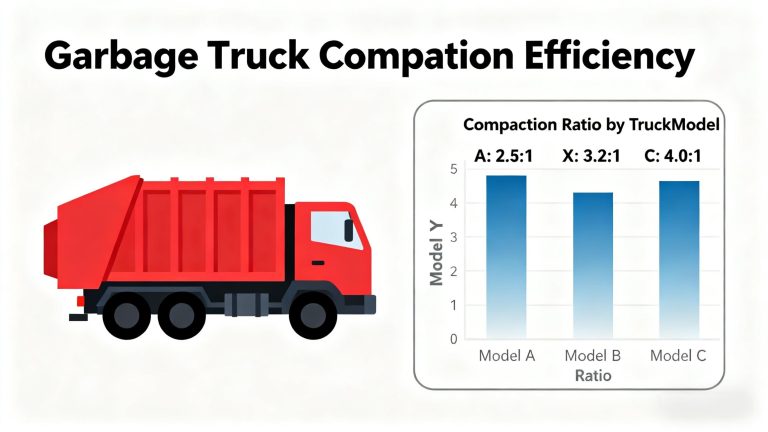
This cycle repeats until the truck reaches its maximum payload. Proper pressure control is essential, as excessive force can damage components, while insufficient pressure reduces compaction efficiency.
Compactor Safety Systems and Operator Protection
Because compactors operate under high hydraulic pressure, safety is a primary design consideration. Modern systems include emergency stop buttons, interlock mechanisms that prevent operation when doors are open, and overload protection to avoid structural damage.
Operators must always maintain a safe distance from moving components and follow standard operating procedures during loading, compaction, and unloading.
Applications Across Different Garbage Truck Types
Compactors are used differently depending on truck configuration.
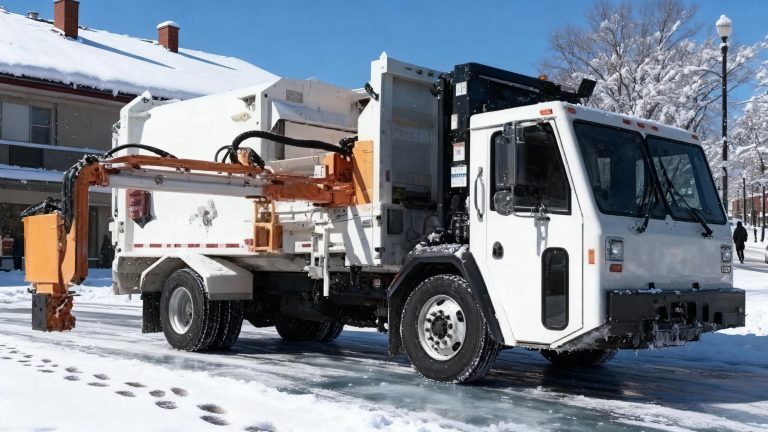
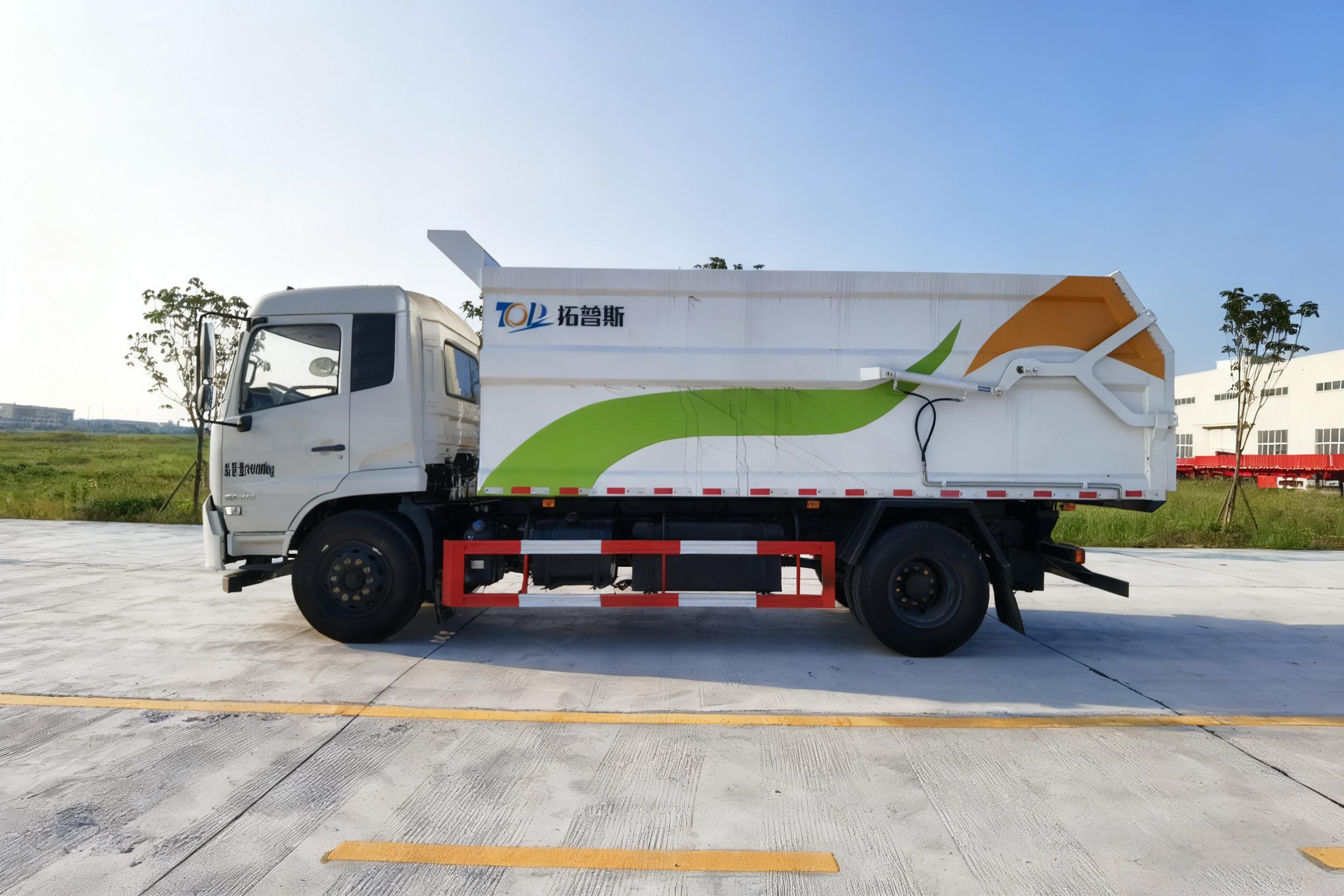
On rear loader garbage trucks, compactors handle mixed and bulky waste loaded manually from the rear. On side loader garbage trucks, compactors work in coordination with automated lifting arms to maintain consistent load density.
Understanding these differences helps fleet operators choose the right configuration for their routes.
Maintenance Considerations for Long-Term Performance
Routine maintenance significantly extends compactor service life. Regular inspection of hydraulic hoses, seals, and cylinders helps prevent leaks and pressure loss. Cleaning the hopper daily reduces corrosion and debris buildup, while scheduled lubrication keeps moving parts operating smoothly.
Ignoring maintenance often leads to downtime, reduced compaction efficiency, and higher repair costs.
Why Compactor Design Matters in Waste Collection
A well-designed garbage truck compactor improves route efficiency, lowers fuel consumption, and enhances operator safety. For municipalities and waste contractors, compactor reliability directly impacts daily productivity and long-term operating costs.