Garbage Truck with Hydraulic Arm for Sale | Capacity & Price
Garbage Truck with Hydraulic Arm for Sale: Arm Types, Lifting Capacity and Price
When a standard garbage truck is not enough for a waste collection project, a garbage truck with hydraulic arm for sale can provide a more practical way to handle containers, bins and other waste collection equipment.
A hydraulic arm can help operators lift, move, tilt or empty waste containers with less manual handling. Depending on the truck design, the hydraulic arm may be installed as part of a rear-loading system, side-loading system, container lifting mechanism or specialized waste-handling equipment.
For buyers, the important questions are not simply whether a truck has a hydraulic arm. The actual configuration should match the container type, container weight, lifting height, truck capacity, collection method and road conditions.
This guide explains how hydraulic-arm garbage trucks work, the main arm configurations, lifting capacity, container compatibility, price factors and what information should be included when requesting a quotation.
1. What Is a Garbage Truck with a Hydraulic Arm?
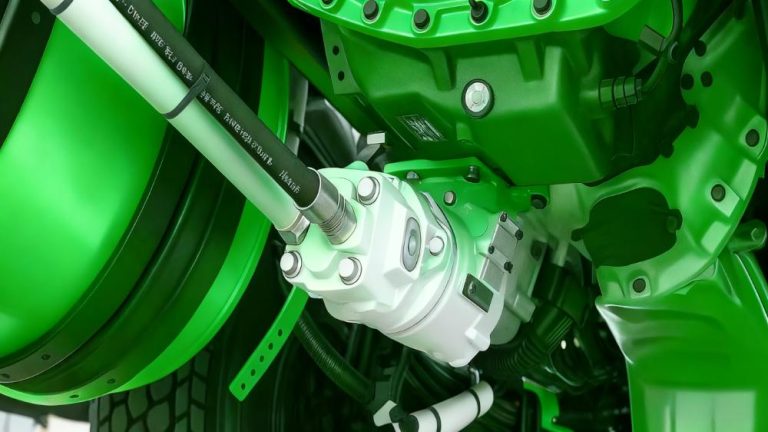
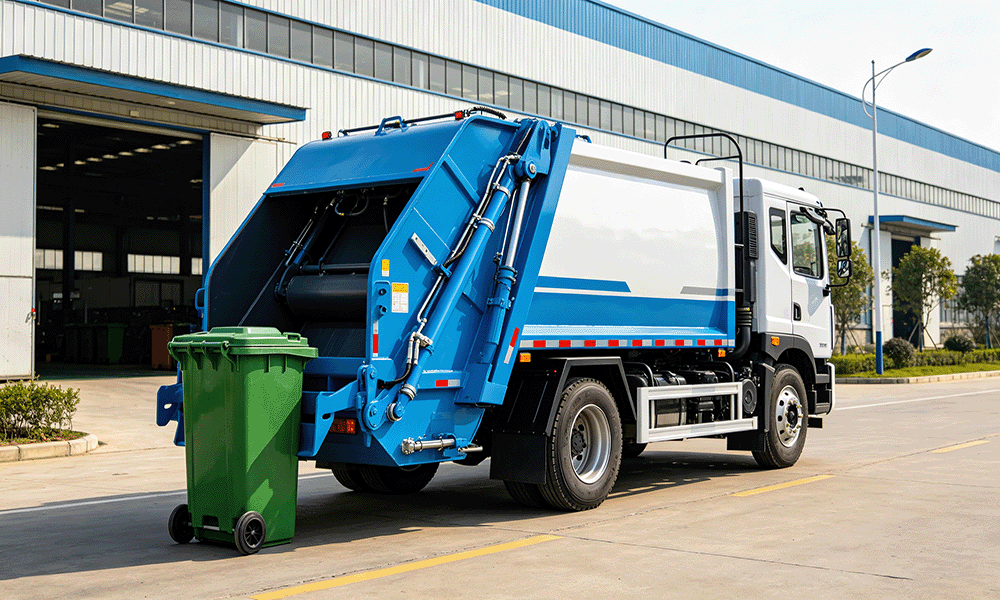
A garbage truck with a hydraulic arm is a waste collection vehicle equipped with a hydraulic-powered mechanical arm for handling garbage containers or other waste-loading equipment.
Instead of requiring workers to manually lift heavy containers, the hydraulic system provides mechanical force to move the container.
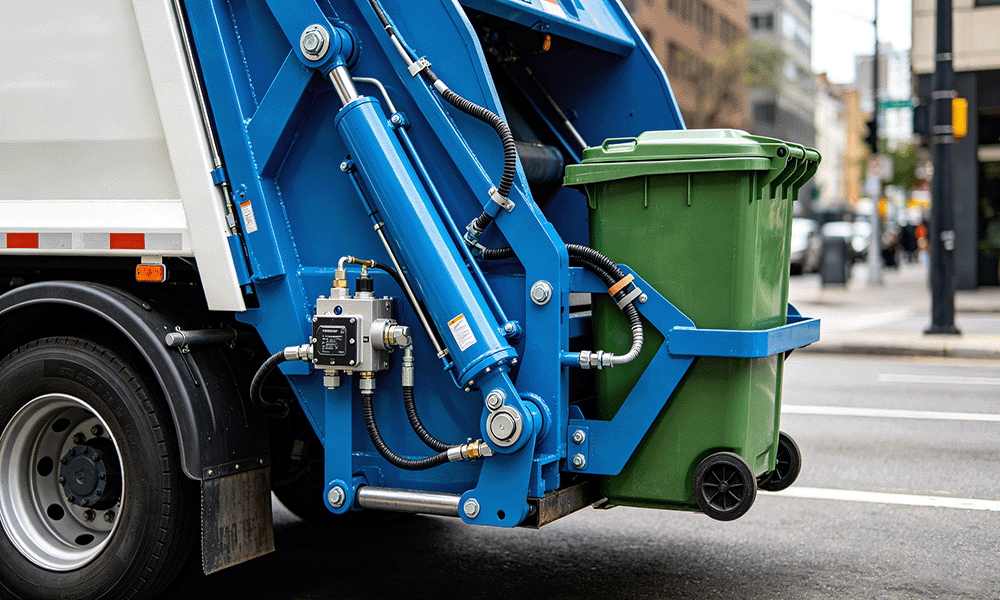
Een typisch systeem kan het volgende omvatten:
- Hydraulic arm
- Hydraulic cylinder
- Hydraulische pomp
- Hydraulic control valve
- Hydraulische slangen
- Container lifting attachment
- Truck-mounted control system
- Garbage collection body
- Optional compaction system
The exact design depends on the intended application.
For example, a truck designed to collect standardized wheeled bins may use a relatively compact lifting mechanism, while a truck handling larger containers may require a stronger arm and different attachment.
2. How Does a Hydraulic Arm Garbage Truck Work?
The basic operating process is relatively straightforward.
Step 1: Position the truck
De vrachtwagen staat vlak bij de afvalcontainer.
Step 2: Connect the hydraulic arm
The operator uses the hydraulic control system to move the arm toward the container.
Step 3: Secure the container
A suitable hook, clamp, lifting frame or other attachment connects the container to the lifting mechanism.
Step 4: Lift the container
Hydraulic cylinders generate the force needed to raise the container.
Step 5: Move and tilt the container
Depending on the design, the arm moves the container toward the loading opening.
Step 6: Empty the container
The container is tilted or inverted so that the waste enters the garbage truck body.
Step 7: Return the container
The hydraulic arm lowers the empty container back to the ground.
This process can reduce manual handling and make container-based waste collection more efficient.
However, the actual movement range and lifting capability depend heavily on the hydraulic arm design.
3. What Types of Hydraulic Arms Are Used on Garbage Trucks?
Not every hydraulic arm garbage truck uses the same mechanism.
The appropriate arm depends on the type of container being collected.
Fixed Hydraulic Lifting Arm
A fixed hydraulic arm is designed for a relatively standardized collection process.
It can be suitable when the waste containers are positioned at predictable locations and have similar dimensions.
This configuration can simplify operation and reduce unnecessary mechanical movement.
Telescopic Hydraulic Arm
A telescopic arm can extend or retract to increase the working range.
This can be useful when containers are located at different distances from the truck.
However, a telescopic system may have a more complex hydraulic structure and should be specified according to the required working radius and lifting load.
Articulated Hydraulic Arm
An articulated arm contains multiple sections that can move relative to each other.
This gives the operator greater flexibility when approaching containers from different positions.
It can be useful for projects where containers are not always positioned directly beside the truck.
Hook-Type Hydraulic Arm
A hook-type system is designed to connect with a suitable container or lifting point.
This type of configuration is commonly associated with specialized container handling rather than ordinary small household bins.
The hook dimensions, container connection point and maximum lifting load must therefore be confirmed before production.
4. Hydraulic Arm vs. Standard Bin Lifter
A hydraulic arm and a conventional bin lifter are not necessarily the same thing.
A standard bin lifter is usually designed for specific standardized garbage bins.
A hydraulic arm can provide a different movement range and may be configured for larger or specialized containers.
| Functie | Standard Bin Lifter | Hydraulic Arm |
|---|---|---|
| Typical containers | Standard wheeled bins | Various container types |
| Movement range | More limited | Potentially wider |
| Configuratie | More standardized | More customizable |
| Operation | Simple | More mechanical control |
| Toepassing | Residential/municipal | Specialized/container collection |
| Lifting requirements | Usually standardized | Must be specified |
| Maatwerk | Matig | Hoger |
For buyers, the important point is that a hydraulic arm should be designed around the container, rather than selecting the arm first and trying to adapt the container afterward.
5. Hydraulic Arm Lifting Capacity
One of the most important specifications is the lifting capacity.
A buyer may see a garbage truck advertised as having a certain body capacity, but this does not mean that the hydraulic arm can lift the same amount of weight.
Bijvoorbeeld:
- Garbage body capacity = 10 m³
- Hydraulic arm lifting capacity = a separate specification
- Chassis payload = another separate limitation
These three values should not be treated as interchangeable.
Factors Affecting Hydraulic Lifting Capacity
The required lifting capacity depends on:
- Container weight
- Waste weight inside the container
- Container dimensions
- Distance between the arm and truck
- Hydraulic cylinder size
- Hydraulische druk
- Arm geometry
- Mounting structure
- Chassis payload
- Road operating conditions
A larger working radius can also affect the effective lifting capability.
Therefore, when requesting a quotation, buyers should provide the maximum loaded container weight, rather than simply saying that they need a “strong hydraulic arm.”
6. Container Compatibility Is Critical
A hydraulic arm garbage truck should be matched to the containers used in the customer’s waste collection system.
Important container information includes:
- Container dimensions
- Gewicht van de lege container
- Maximaal laadgewicht
- Container volume
- Hefpunten
- Hook position
- Wielconfiguratie
- Ground clearance
- Required lifting height
- Required dumping angle
For example, a truck designed for a standardized 120-liter or 240-liter wheeled bin may use a different lifting mechanism from a truck designed for a large industrial waste container.
If the container is not compatible with the lifting attachment, the hydraulic arm may not operate correctly even if its hydraulic capacity is sufficient.
What Should You Send to the Manufacturer?
If possible, provide:
- Container photos
- Container dimensions
- Container volume
- Container weight
- Lifting-point dimensions
- Maximaal laadgewicht
A short video showing how the existing container is normally collected can also help the manufacturer understand the application.
7. Hydraulic Arm Garbage Truck Capacity
The garbage body itself can be configured in different capacities.
Typical project requirements may include:
- Small-capacity garbage trucks
- Medium-capacity collection trucks
- Large-capacity municipal garbage trucks
- Specialized container handling trucks
De juiste laadcapaciteit is afhankelijk van het dagelijkse afvalvolume en de ophaalroute.
A larger body is not automatically better.
If the truck operates on narrow urban roads and collects relatively small containers, excessive body capacity may increase vehicle size without providing a practical benefit.
For larger municipal routes, commercial waste collection or long-distance collection, a higher-capacity body may be more appropriate.
You can compare different truck capacities in our guide to garbage truck for sale by capacity.
8. Can a Hydraulic Arm Be Combined with a Garbage Compactor?
Yes, depending on the intended configuration.
A hydraulic lifting mechanism can be integrated with a garbage collection body that includes a compaction system.
The general workflow can be:
Container → Hydraulic Arm → Loading Opening → Garbage Body → Compaction System
The hydraulic arm handles the container while the compaction system increases the effective waste-loading efficiency inside the body.
This combination can be useful for municipal and commercial waste collection projects where:
- Waste volume is relatively high
- Collection routes are long
- Container handling needs to be mechanized
- Manual loading should be reduced
- Higher collection efficiency is required
The final configuration should be designed according to the container and chassis rather than selected from a generic specification sheet.
9. Hydraulic Arm Garbage Truck Applications
A garbage truck with hydraulic arm can be used in several waste collection environments.
Huisvuilophaling
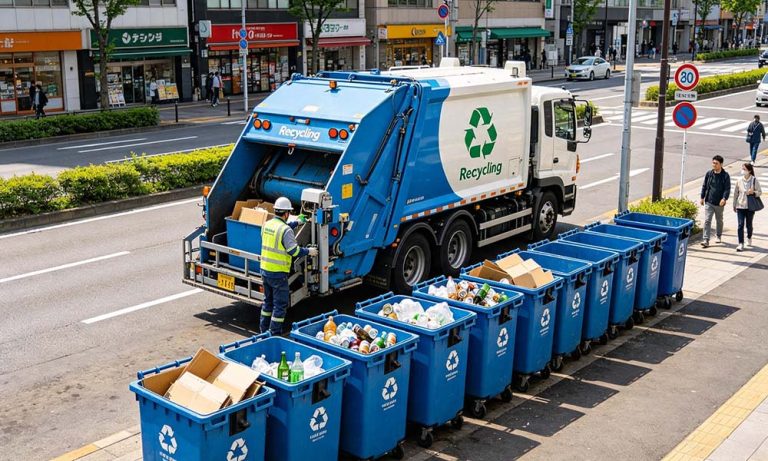
Municipal projects may use hydraulic lifting systems to collect standardized or larger waste containers from residential areas.
Commercial Waste Collection
Shopping centers, markets, restaurants, hotels and commercial properties may use containers that require mechanical handling.
Inzameling van bedrijfsafval
Factories and industrial facilities can generate larger quantities of waste and may use larger containers.
In this case, container weight becomes particularly important when selecting the hydraulic arm.
Construction and Specialized Waste
Some specialized waste collection projects use containers that are not suitable for ordinary household garbage trucks.
A customized hydraulic arm can provide additional handling capability when standard bin-lifting equipment is insufficient.
10. Hydraulic Arm vs. Side Loader Garbage Truck
There can be some overlap between hydraulic-arm systems and side-loading garbage trucks.
A side loader may use an automated or semi-automated lifting mechanism to collect containers positioned beside the vehicle.
A hydraulic arm may provide a more flexible mechanical movement depending on its design.
| Requirement | Zijlader | Hydraulic Arm System |
|---|---|---|
| Standard wheeled bins | Excellent fit | Depends on attachment |
| Geautomatiseerde inning | Algemeen | Possible |
| Container flexibility | Matig | Potentially higher |
| Working range | Defined by loader | Depends on arm design |
| Large/special containers | Configuration dependent | Can be customized |
| Manual handling reduction | Hoog | Hoog |
The best configuration depends on the actual collection container and operating environment.
For standard automated bin collection, you can also review our automatic garbage truck for sale guide.
11. What Affects the Price of a Hydraulic Arm Garbage Truck?
There is no single price for a garbage truck with hydraulic arm.
The final quotation can change significantly depending on the configuration.
Important cost factors include:
Vrachtwagenchassis
Chassis brand, engine specification, axle configuration and payload rating all influence the total vehicle cost.
Capaciteit van de afvalbak
A larger garbage body generally requires a different chassis and more material.
Hydraulic Arm
Arm length, lifting capacity, cylinder size and mechanical structure affect the cost.
Container Attachment
A simple standardized attachment may cost less than a specialized customized connection system.
Verdichtingssysteem
If the truck includes hydraulic compaction equipment, the body becomes more complex.
Automation Level
Automatic controls, remote operation or additional sensors can increase the equipment cost.
Configuratie exporteren
For international orders, the quotation may also depend on:
- Merk chassis
- Driving position
- Shipping method
- Bestemmingshaven
- Reserveonderdelen
- Painting requirements
- Documentatie
- Lokale voorschriften
- Optionele uitrusting
For more information about the broader price structure, see prijs van een vuilniswagen.
12. How to Choose the Right Hydraulic Arm Garbage Truck
Before purchasing, buyers should define the project requirements.
A useful specification checklist includes:
1. Container type
What type of container will the truck lift?
2. Container capacity
How many cubic meters or liters does the container hold?
3. Maximum loaded weight
What is the heaviest container when fully loaded?
4. Lifting height
How high does the container need to be lifted?
5. Working radius
How far from the truck can the arm reach?
6. Garbage body capacity
How much waste should the truck carry?
7. Compaction requirement
Is waste compaction required?
8. Chassis requirement
What road conditions and payload requirements apply?
9. Automation level
Should the system be manual, hydraulic-assisted, semi-automatic or fully automated?
10. Destination market
What country and port will the truck be shipped to?
This information allows a manufacturer to recommend a configuration rather than simply providing a generic truck price.
13. What Information Should Be Included in a Quotation Request?
If you want to buy a hydraulic arm garbage truck, providing detailed information can make the quotation process much faster.
A buyer can send:
We need a garbage truck with hydraulic arm for waste container collection.
Destination: [Country/Port]
Container type: [Type]
Container capacity: [m³]
Maximum loaded weight: [kg]
Required truck capacity: [m³]
Chassis: [Preferred brand]
Quantity: [Units]
Please provide FOB/CIF price, specifications and delivery time.
If container photos are available, they should be included with the inquiry.
This is particularly useful when the container uses a non-standard lifting connection.
14. Why Work with a Manufacturer for a Customized Hydraulic Arm?
Hydraulic-arm garbage trucks often require coordination between the chassis, garbage body, hydraulic system and lifting mechanism.
For customized projects, the manufacturer needs to ensure that:
- Chassis payload matches the body
- Hydraulic system matches the arm
- Arm mounting points are structurally suitable
- Container connection is compatible
- Lifting capacity matches the actual load
- Vehicle dimensions remain practical
- Hydraulic controls are easy to operate
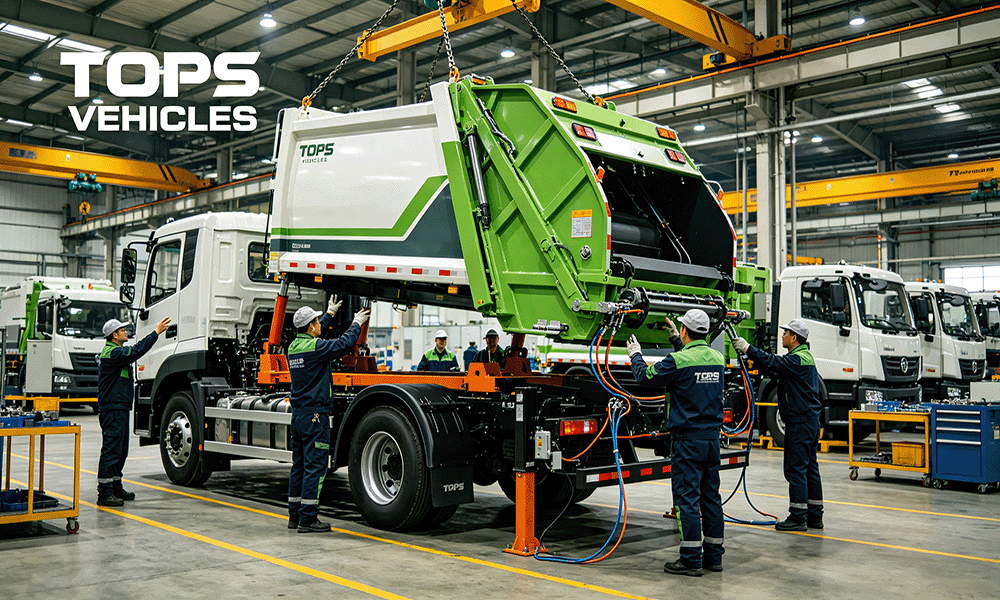
Op TOPS-VOERTUIGEN, garbage collection vehicles can be configured according to the customer’s required capacity, chassis, container type and operating conditions.
Instead of choosing only by body volume, buyers should provide the actual container and operating requirements so the complete vehicle can be matched accordingly.
15. Hydraulic Arm Garbage Truck Buying Checklist
Before placing an order, confirm the following:
- Container type confirmed
- Container dimensions confirmed
- Maximum loaded container weight confirmed
- Hydraulic arm lifting capacity confirmed
- Required lifting height confirmed
- Working radius confirmed
- Garbage body capacity confirmed
- Compaction requirement confirmed
- Chassis payload confirmed
- Hydraulic system specification confirmed
- Control method confirmed
- Container attachment confirmed
- Destination port confirmed
- Spare parts requirement confirmed
- Final quotation confirmed
This checklist can prevent one of the most common problems in customized garbage truck purchasing: selecting a truck based only on its body capacity while ignoring the actual container-handling requirements.
FAQ: Garbage Truck with Hydraulic Arm for Sale
1. What is a garbage truck with a hydraulic arm?
It is a waste collection vehicle equipped with a hydraulic-powered arm used to lift, move, tilt or empty garbage containers.
2. How much weight can a hydraulic garbage truck arm lift?
The lifting capacity depends on the arm design, hydraulic cylinders, working radius, hydraulic pressure, container position and chassis configuration. The required capacity should be calculated from the maximum loaded container weight.
3. Can a hydraulic arm lift different types of garbage containers?
Yes, but the lifting attachment must be compatible with the container. Container dimensions, connection points and weight should be confirmed before production.
4. Can the hydraulic arm work with a garbage compactor?
Yes. Depending on the design, the hydraulic arm can be integrated with a compaction garbage body.
5. Is a hydraulic arm better than a standard bin lifter?
They serve different applications. A standard bin lifter is often suitable for standardized wheeled bins, while a hydraulic arm can provide a more customizable lifting configuration for certain container-handling applications.
6. How much does a garbage truck with hydraulic arm cost?
The price depends on the chassis, garbage body capacity, hydraulic arm, lifting capacity, container attachment, compaction system, automation level and export configuration.
7. What information should I send for a quotation?
Send the destination, quantity, container photos and dimensions, maximum loaded container weight, required truck capacity, preferred chassis and any special lifting requirements.