Производительность мусоровоза для различных видов отходов
Garbage truck compactors are designed to handle a wide range of waste materials, but not all waste types behave the same during compaction. Waste composition, density, and moisture content significantly influence compaction efficiency, wear rate, and operating stability.
This article explains how compactors perform when handling different waste types commonly encountered in municipal and commercial operations.
Compaction Behavior of Household Municipal Waste
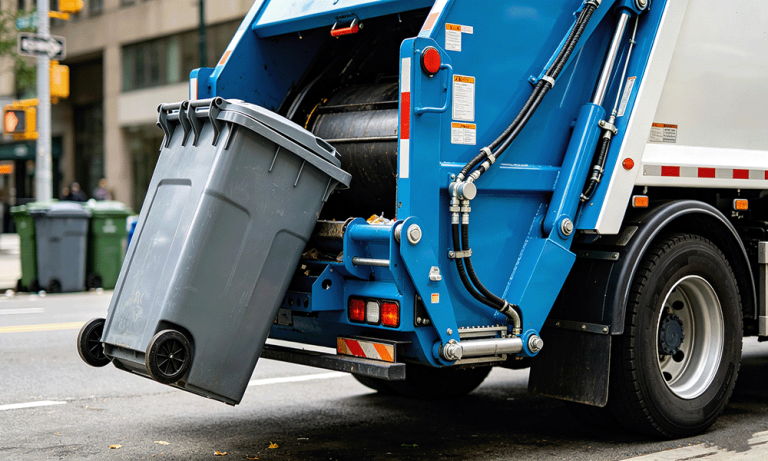
Household waste typically consists of mixed materials such as packaging, food residue, paper, and plastics. This type of waste responds well to standard compaction cycles due to its moderate density and compressibility.
Key characteristics:
- Stable compaction ratio
- Even load distribution
- Lower stress on structural components
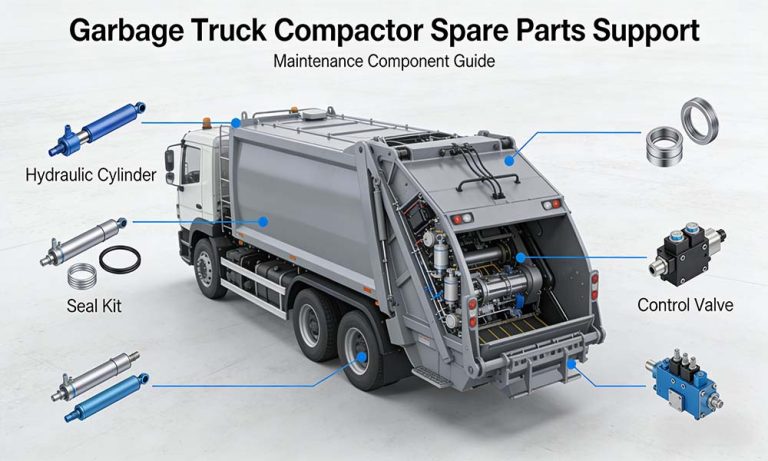
For basic compactor structure and force distribution, refer to
👉 конструкция компактора мусоровоза
Handling Bulky and Irregular Waste Materials
Bulky waste such as furniture, wooden pallets, or large plastic containers presents unique challenges. These materials often resist compression and create uneven force distribution.
Operational considerations include:
- Centered placement inside the hopper
- Reduced cycle speed
- Avoiding repeated full-pressure cycles
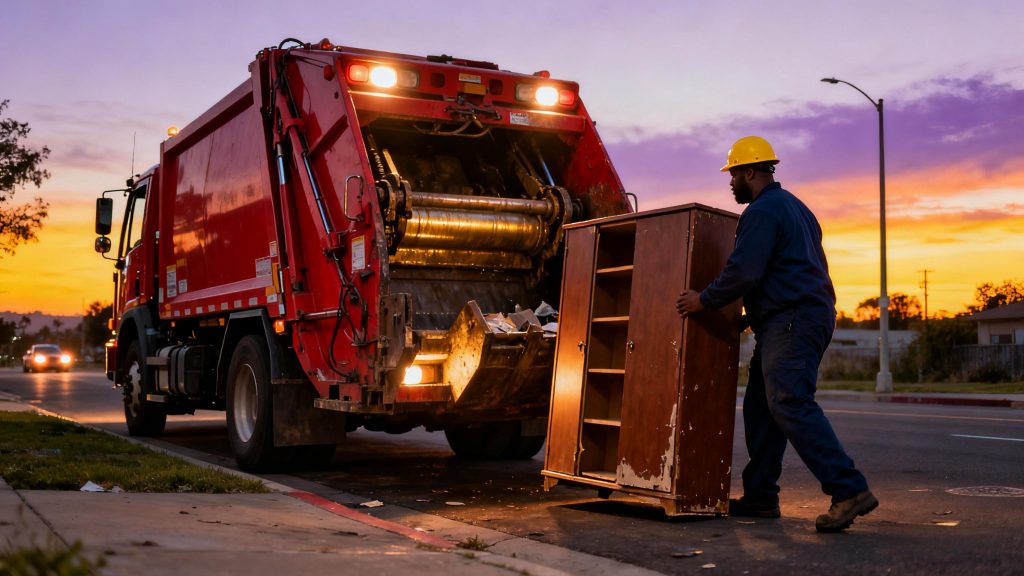
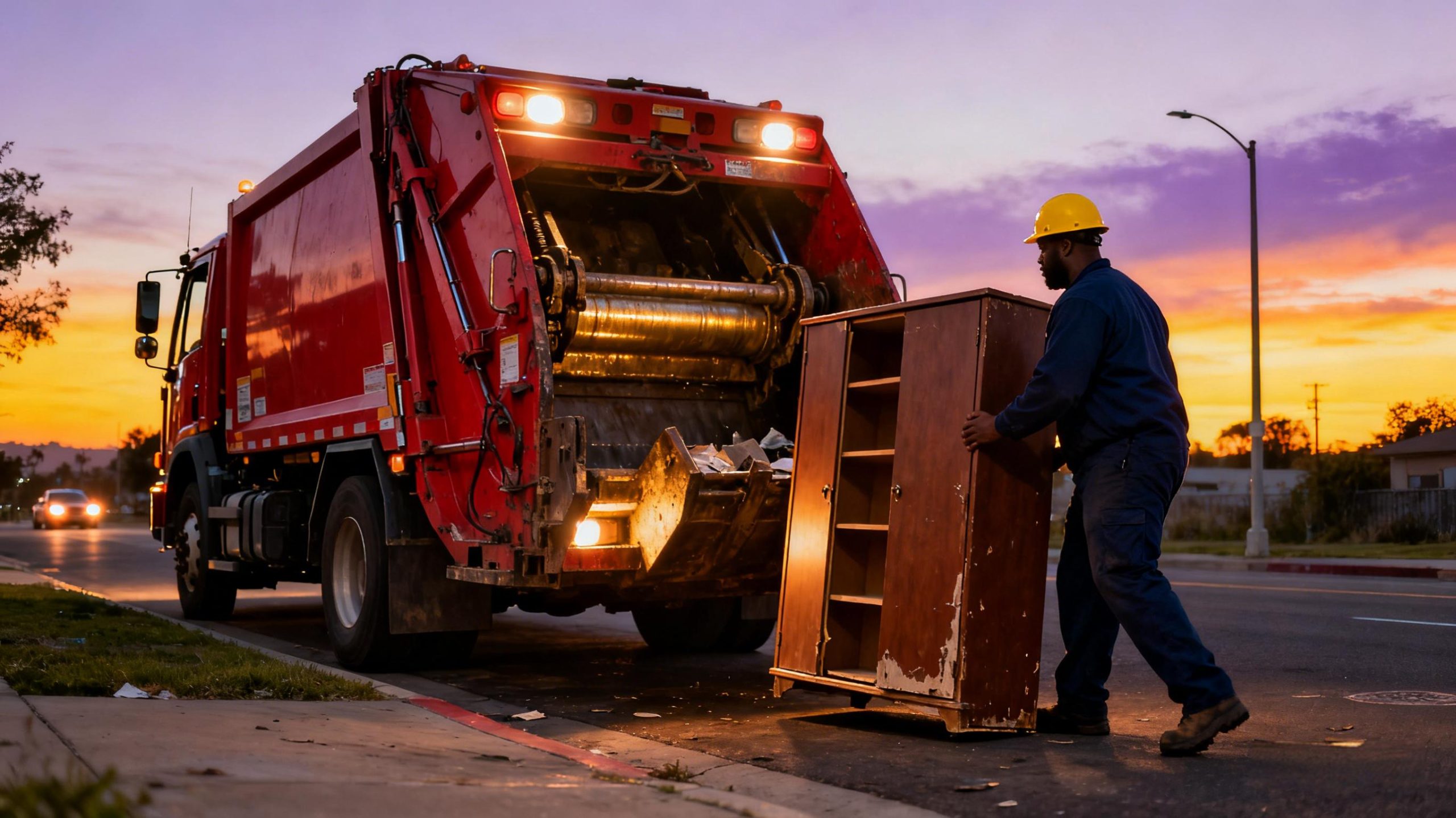
Improper handling of bulky waste can damage slide rails and compaction plates.
👉 Безопасность и эксплуатация прессователя мусоровоза
Wet and Organic Waste Compaction Characteristics
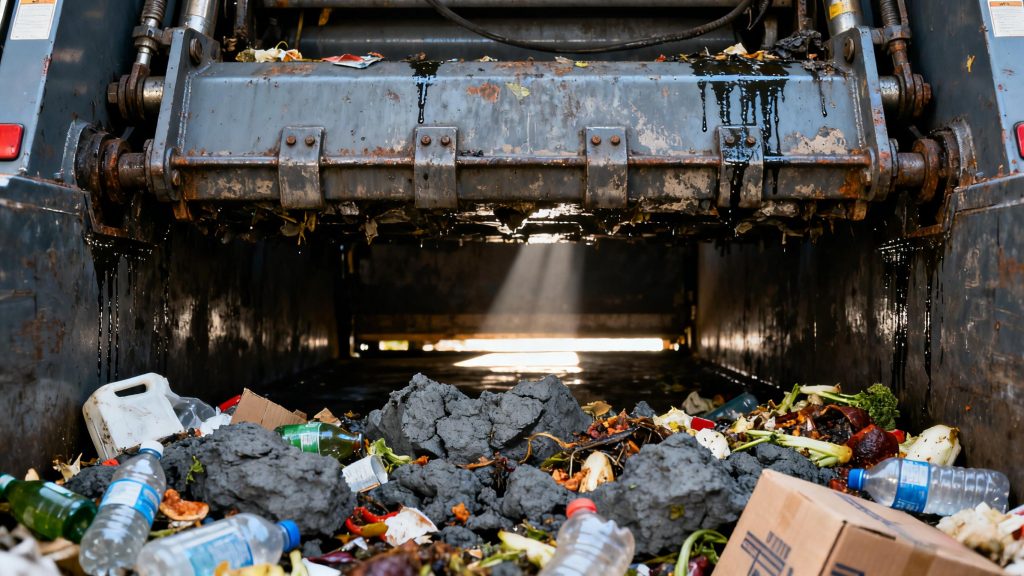
Organic waste with high moisture content behaves differently during compaction. Liquids reduce friction, causing waste to slide rather than compress.
Common effects:
- Lower effective compaction ratio
- Increased hydraulic load
- Higher risk of leakage and corrosion
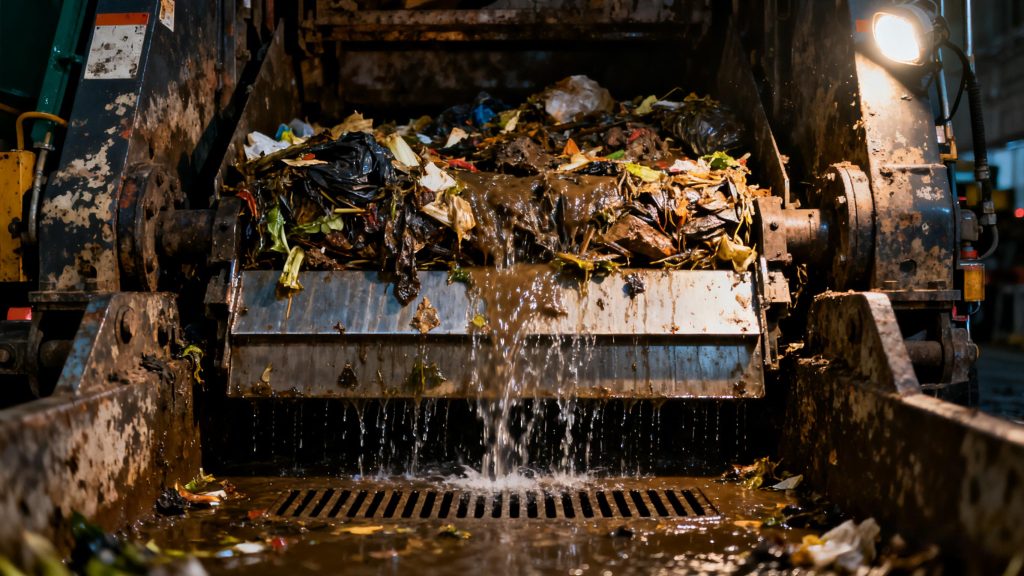
Hydraulic system stability is especially important in these conditions.
👉 гидравлическая система компактора мусоровоза
Construction and Demolition Waste Limitations
Construction debris such as concrete fragments, bricks, and metal scrap is generally not suitable for standard compactor trucks. These materials offer minimal compression and generate extreme localized stress.
Risks include:
- Structural deformation
- Cylinder overload
- Accelerated wear of pins and bushings
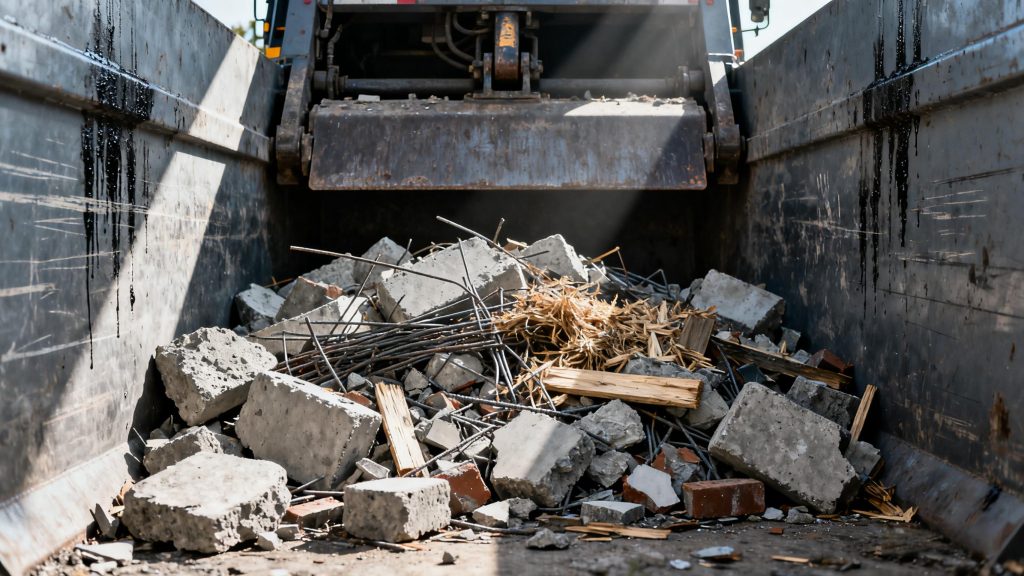
For these materials, specialized collection equipment is recommended instead of conventional compactors.
Matching Compactor Settings to Waste Type
Adjusting compactor operation based on waste type improves efficiency and reduces damage:
- Short cycles for light waste
- Moderate pressure for mixed waste
- Controlled cycles for bulky items
- Frequent cleaning when handling wet waste

Understanding efficiency and compaction ratios helps optimize these settings.
👉 Эффективность пресса мусоровоза и степень уплотнения
Why Waste Type Awareness Improves Fleet Performance
Operators who understand how different waste types affect compaction can reduce downtime, prevent premature failures, and extend service life. Matching compactor design and operation to waste characteristics is essential for long-term fleet reliability.