Bên trong máy nén rác của xe thu gom rác: Phân tích cấu trúc chi tiết
What Happens Inside the Compaction System of a Rear Loader Truck
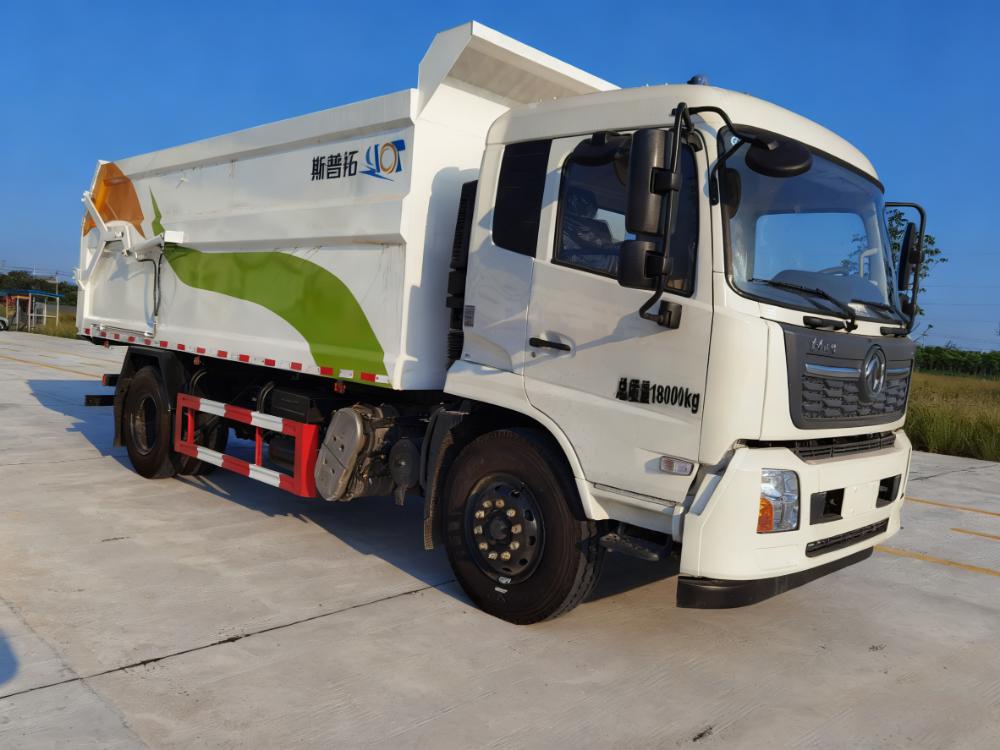
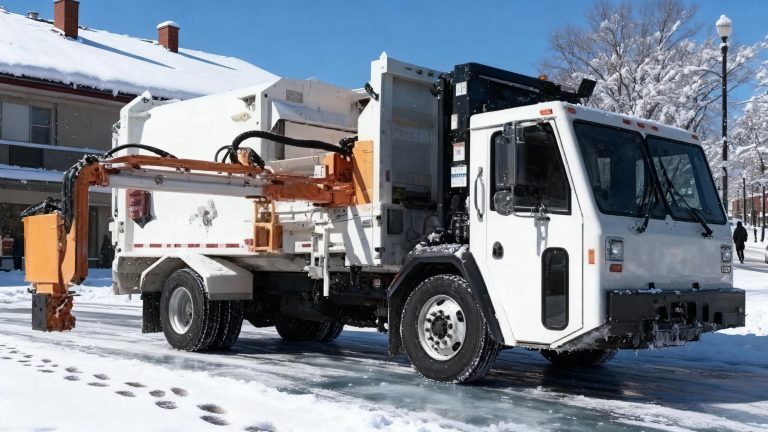
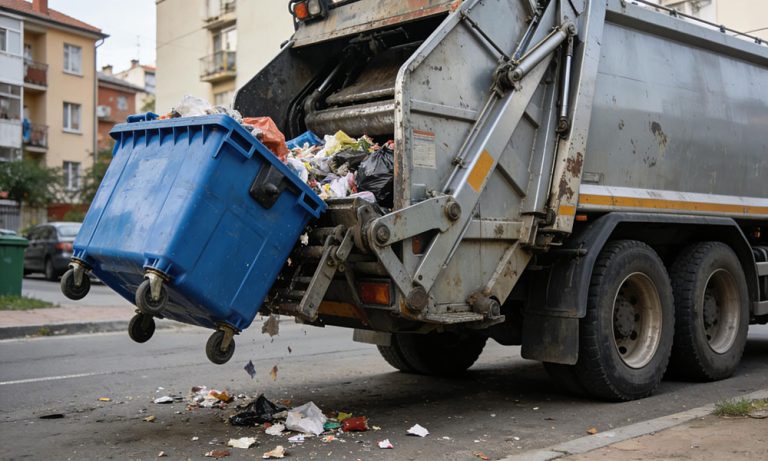
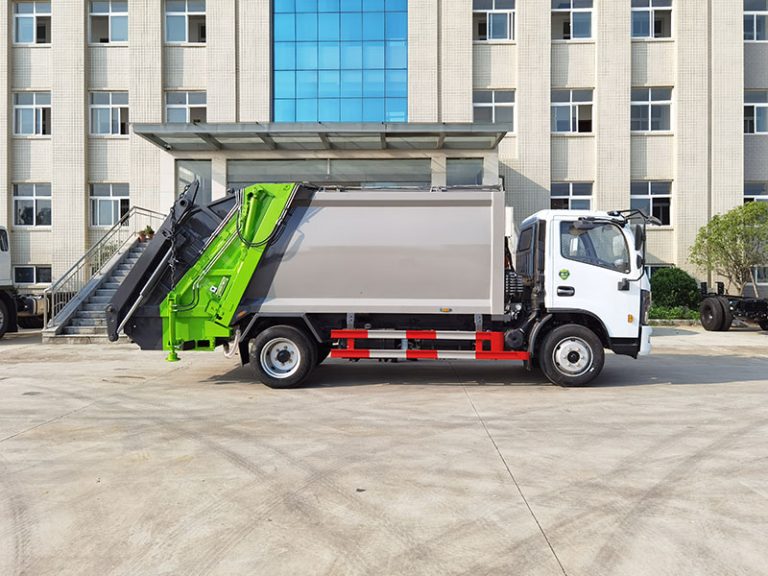
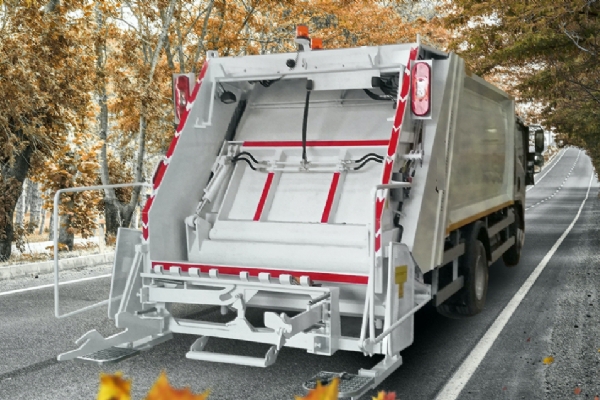
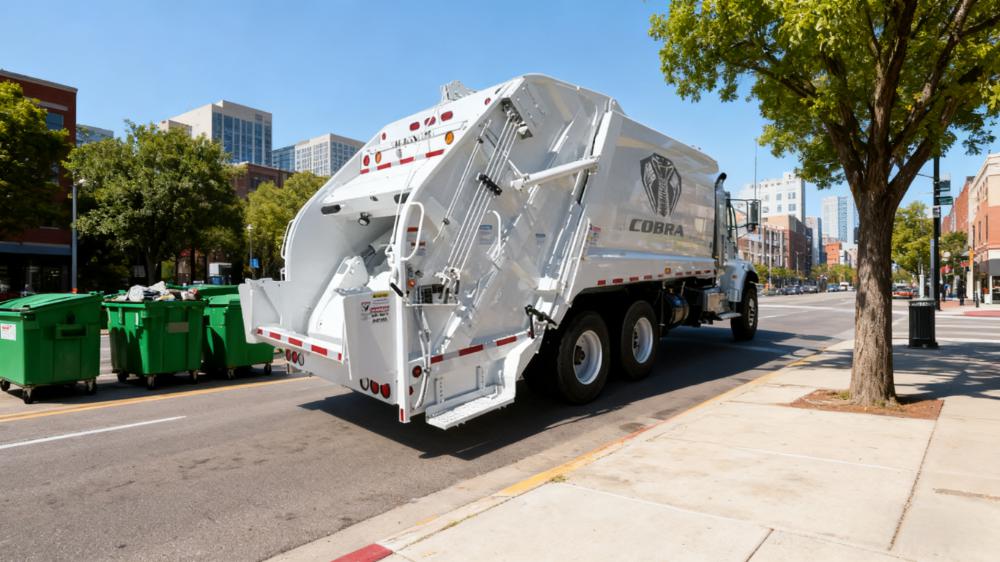
Most people see a garbage truck from the outside, but very few know what happens inside the compactor chamber. A modern Xe thu gom rác có thiết bị nén rác is a coordinated system of steel structures, hydraulic cylinders, guide rails, and moving blades. Each component plays a role in compressing waste safely and efficiently.
This structural breakdown gives buyers, engineers, and fleet operators a clear look at what’s actually happening “inside a Xe thu gom rác có thiết bị nén rác,” using Tops Vehicle’s rear loader design as a reference.
1. The Hopper — Where the Work Begins
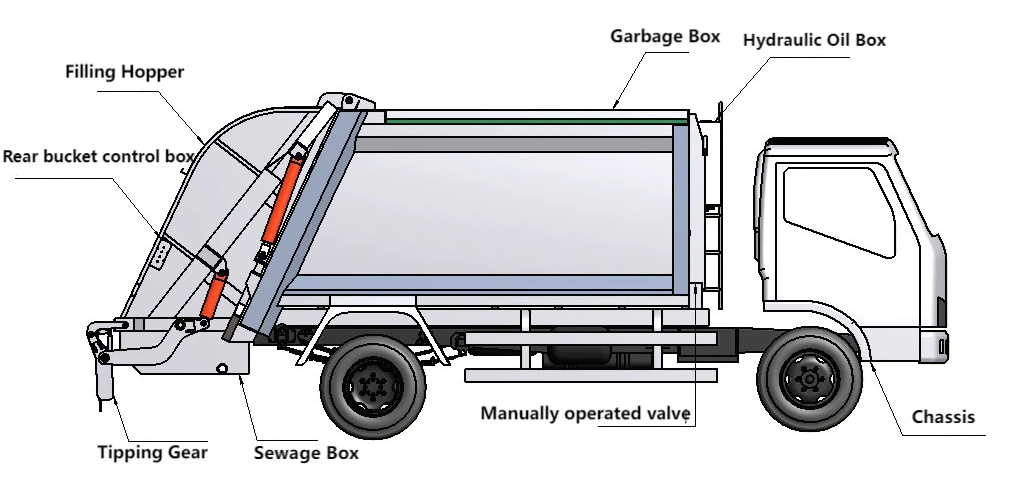
The hopper is the first area where waste enters the system. Its internal structure is built to handle collision, friction, and constant impact from bins and loose materials.
Key elements include:
- Reinforced edges to prevent deformation
- Curved walls to guide waste toward the blade
- Wear-resistant plates for longer service life
2. The Moving Blade — Core of the Compaction System
Once waste enters the hopper, the compaction blade begins its push. This blade is one of the most stressed components in the entire truck.
Blade features:
- High-strength steel (6–8mm) with rib reinforcements
- Wide surface area for balanced compression
- Optimized curve design to prevent waste from returning backward
The blade cycles forward and backward under hydraulic force, creating the crushing action that compacts loose waste.
3. The Slide Panel — Directs Waste Into the Body
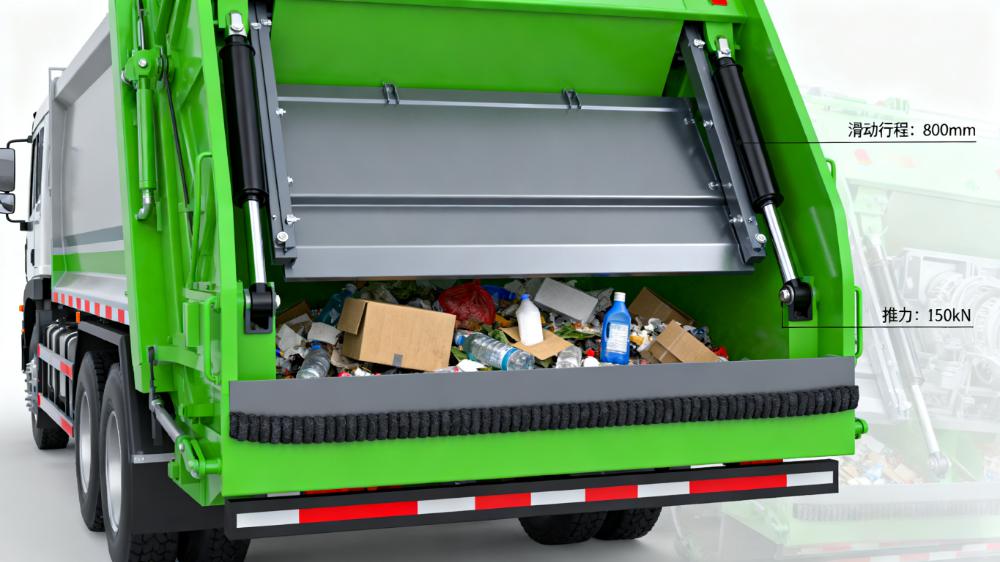
Behind the blade sits the slide panel (sometimes called the sweep panel). This structure moves in coordination with the blade to lift, guide, and deliver compressed waste into the main body.
Benefits of a strong slide panel:
- Prevents material from clogging
- Ensures smooth movement even with dense loads
- Helps maintain a stable compaction ratio
4. Hydraulic Cylinders — The Muscle Behind the Motion
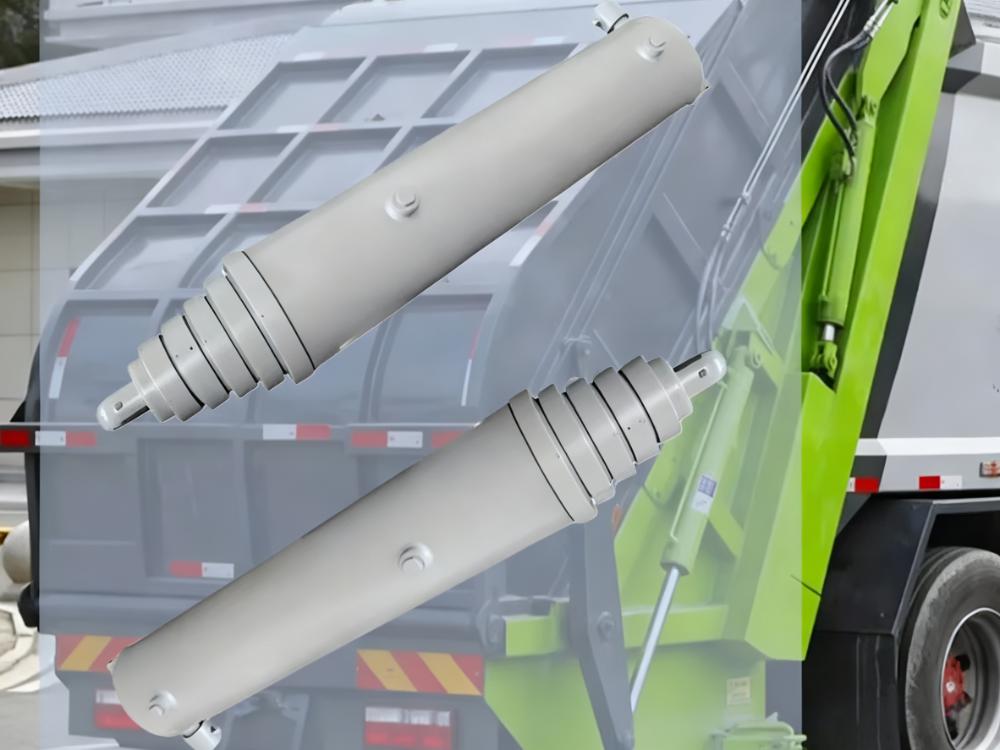
Inside the compactor, hydraulic cylinders are the true power source. They convert hydraulic pressure into mechanical force, pushing the blade and panel through heavy loads.
What the cylinders handle:
- Continuous repeated pressure
- High workloads during peak collection hours
- Sudden resistance when compressing dense waste
Typical cylinder parts include:
- Main compaction cylinder
- Slide panel cylinder
- Tailgate lift cylinders
5. Guide Rails and Structural Frame
To keep all moving parts aligned, guide rails are installed on both sides of the compactor chamber. These rails prevent misalignment and ensure smooth blade movement.
The internal frame structure uses:
- Welded I-beam reinforcements
- Thick side walls for impact resistance
- Anti-corrosion coating for long-term durability
A stronger internal frame reduces maintenance and prevents costly downtime.
6. The Compaction Chamber — Final Stage of Compression
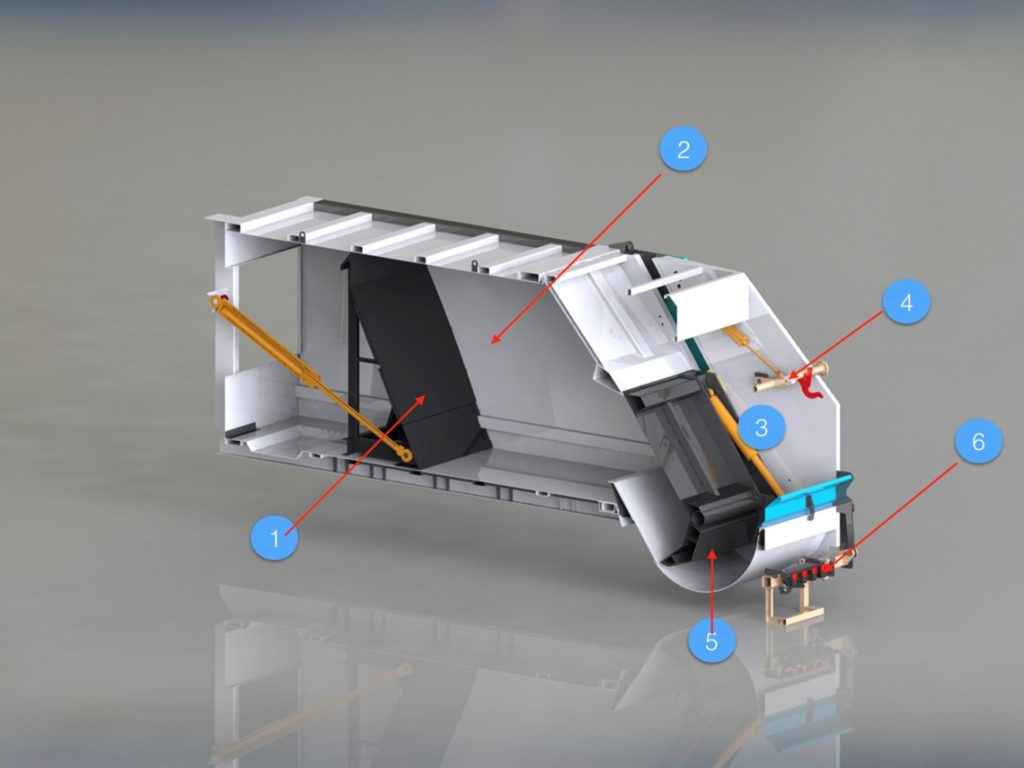
Inside the main body, the compressed waste forms dense blocks. The shape and strength of the chamber influence:
- Compaction ratio
- Waste volume capacity
- Structural stability
Tops Vehicle uses high-strength steel plates và anti-wear reinforcement zones to extend body life, especially for cities with high-density waste.
7. What Makes Tops Vehicle’s Structure Different
Xe Tops enhances the internal structure with:
- Reinforced sliding grooves
- Stronger blade ribs
- Double-layer stress points
- Optional Hardox wear plates
These upgrades improve performance for global markets with mixed waste types, high daily workloads, or long-distance hauling.