Garbage Truck Capacity Guide: Sizes, Types & How to Choose
Garbage truck capacity is one of the most important factors to consider when selecting a waste collection vehicle. The right capacity directly affects operational efficiency, transportation costs, and overall productivity.
For municipalities, contractors, and private waste management companies, choosing the correct truck size ensures optimal performance and avoids unnecessary expenses. Understanding how capacity is measured and how it relates to different applications is essential for making the right decision.
What Does Garbage Truck Capacity Mean?
Garbage truck capacity usually refers to the volume of waste the truck can hold, measured in cubic meters (m³). It indicates how much waste can be collected before the truck needs to be emptied.
However, capacity is not just about volume. It also depends on:
- Compaction ratio
- Waste type
- Truck design
Understanding these factors helps buyers evaluate real working capacity rather than just theoretical volume.
To better understand how compaction affects capacity, buyers often review garbage truck compaction capacity explanation before selecting a model.
Common Garbage Truck Capacity Ranges
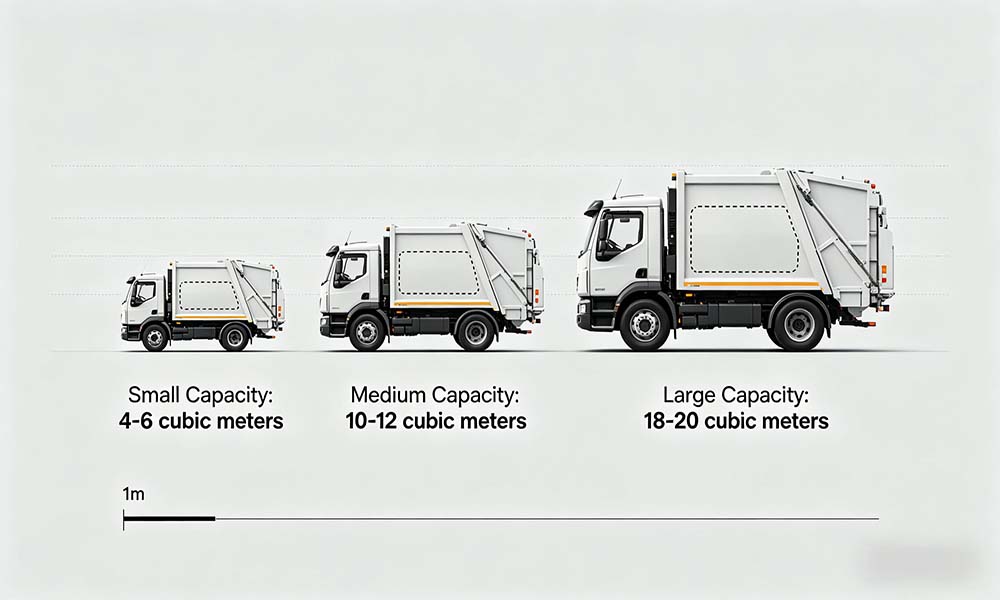
Garbage trucks are typically divided into three main categories based on capacity.
Small Garbage Trucks (3–6 m³)
These trucks are suitable for:
- Narrow streets
- Small communities
- Rural areas
They are easy to operate and cost-effective but have limited capacity.
Medium Garbage Trucks (8–12 m³)
This is the most commonly used category.
Suitable for:
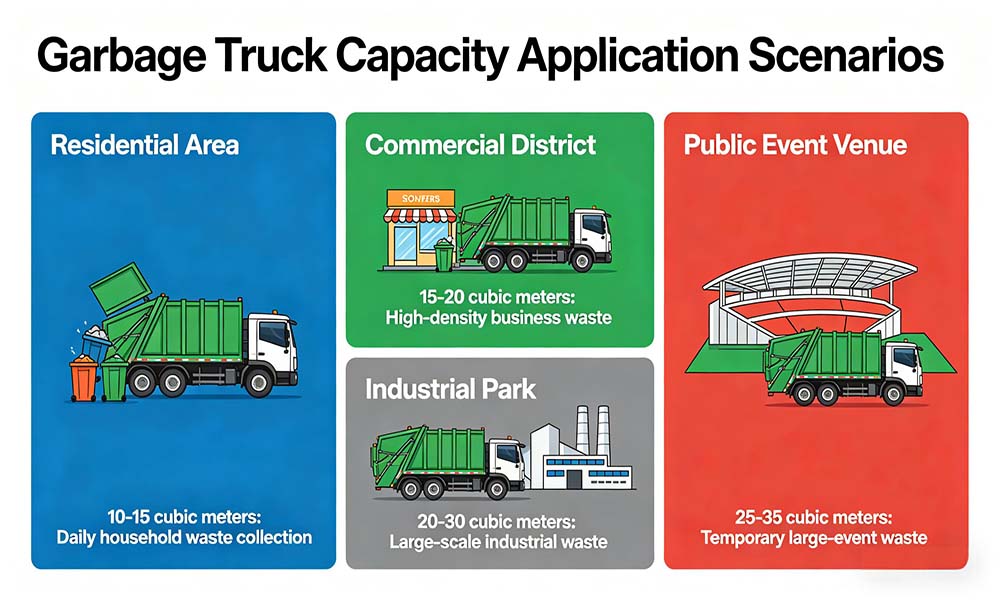
- Urban residential areas
- Medium-sized routes
- Municipal services
They offer a balance between capacity and maneuverability.
Large Garbage Trucks (14–20 m³)
These trucks are designed for:
- High-volume waste collection
- Industrial zones
- Large cities
They reduce the number of trips required but require wider roads and more space.
Buyers often compare these options using a garbage truck size selection guide to determine which category best fits their needs.
Capacity Differences by Truck Type
Different types of garbage trucks offer varying capacity ranges.
Rear Loader Capacity
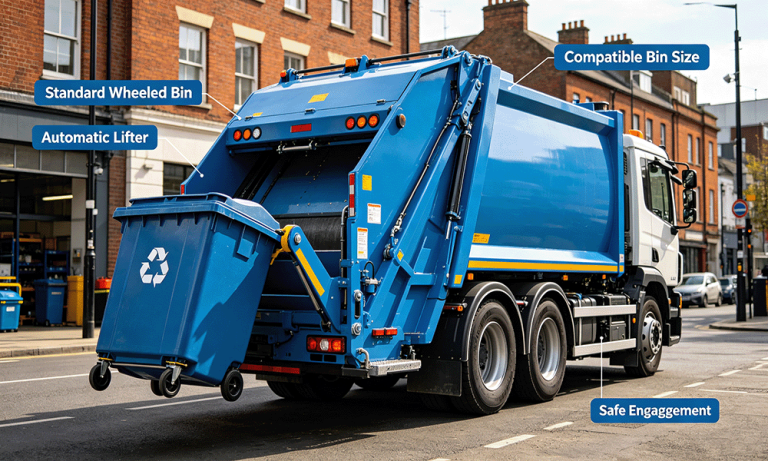
Rear loader trucks typically range from 6 m³ to 20 m³ and are widely used due to their flexibility.
Front Loader Capacity
Front loader trucks usually have larger capacities, often between 10 m³ and 20 m³, making them suitable for commercial waste collection.
Side Loader Capacity
Side loader trucks generally range from 10 m³ to 18 m³ and are optimized for automated collection systems.
Understanding how each type performs helps buyers select the most suitable configuration. Many buyers review garbage truck type capacity comparison before making decisions.
Factors That Affect Real Capacity
The actual working capacity of a garbage truck depends on several factors.
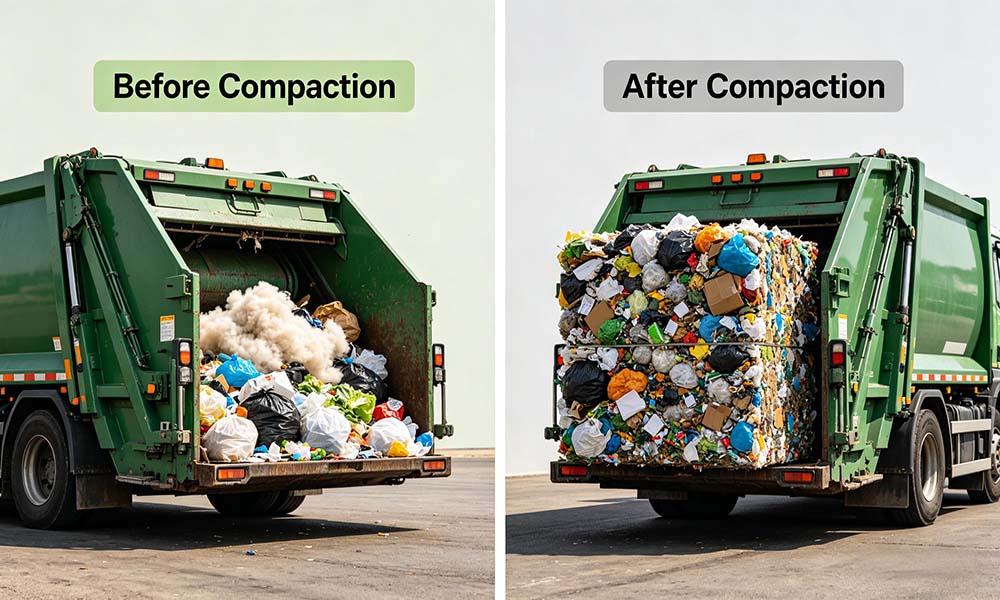
Compaction Ratio
Compaction systems can significantly increase effective capacity by compressing waste.
Waste Type
Loose waste occupies more space, while compact waste allows higher load capacity.
Loading Method
Manual loading vs automated loading can affect how efficiently the space is used.
Route Design
Short routes may require smaller trucks, while long routes benefit from larger capacity.
Buyers often analyze these factors using a refuse truck capacity calculation method to better estimate real-world performance.
How to Choose the Right Capacity
Selecting the correct capacity depends on operational needs.
Analyze Waste Volume
Estimate how much waste is generated daily.
Consider Route Efficiency
Long routes require larger capacity to reduce trips.
Evaluate Road Conditions
Narrow streets may limit the size of the truck.
Balance Cost and Efficiency
Larger trucks cost more but may reduce operating costs over time.
Buyers often rely on garbage truck capacity planning guide to align truck size with operational requirements.
Common Mistakes When Choosing Capacity
Common issues include:
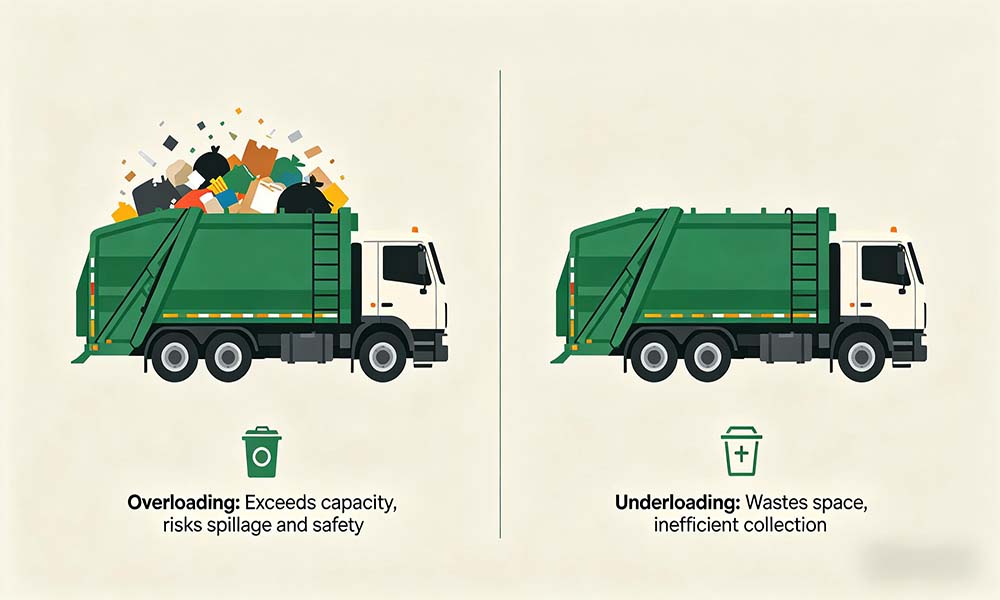
- Choosing a truck that is too small
- Overestimating capacity needs
- Ignoring compaction efficiency
- Not considering route conditions
Avoiding these mistakes helps improve efficiency and reduce costs.
Capacity and Cost Relationship
Capacity has a direct impact on cost.
Key considerations:
- Larger trucks have higher initial costs
- Fewer trips reduce fuel and labor costs
- Proper capacity improves efficiency
Understanding this relationship helps buyers make cost-effective decisions.
Buyers often evaluate options using garbage truck cost vs capacity analysis to determine the best investment.
Why Capacity Is a Key Decision Factor
Capacity determines how efficiently a garbage truck can operate. Choosing the right size ensures that waste collection is completed effectively without unnecessary costs or operational challenges.
For buyers, understanding capacity is not just about numbers—it is about optimizing the entire waste management process.